
Last updated October 16, 2026
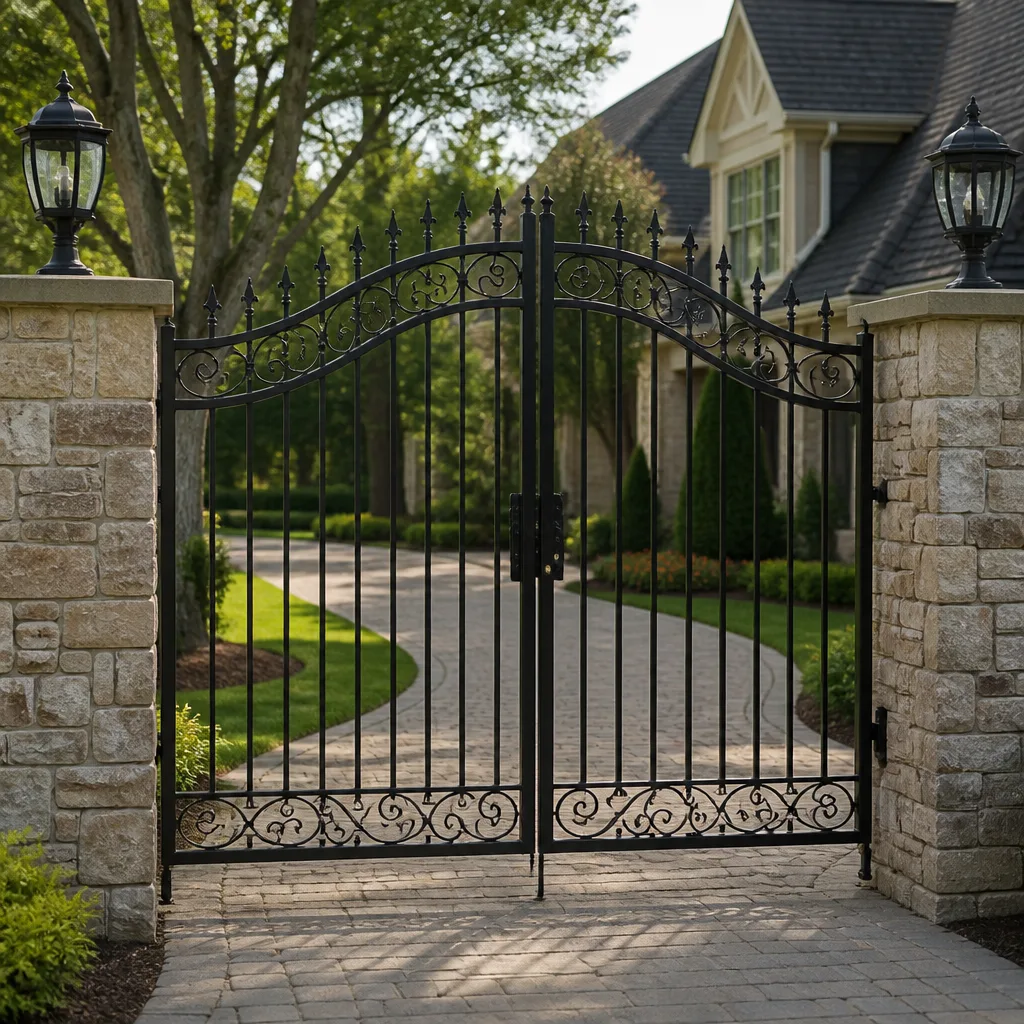 Wrought iron
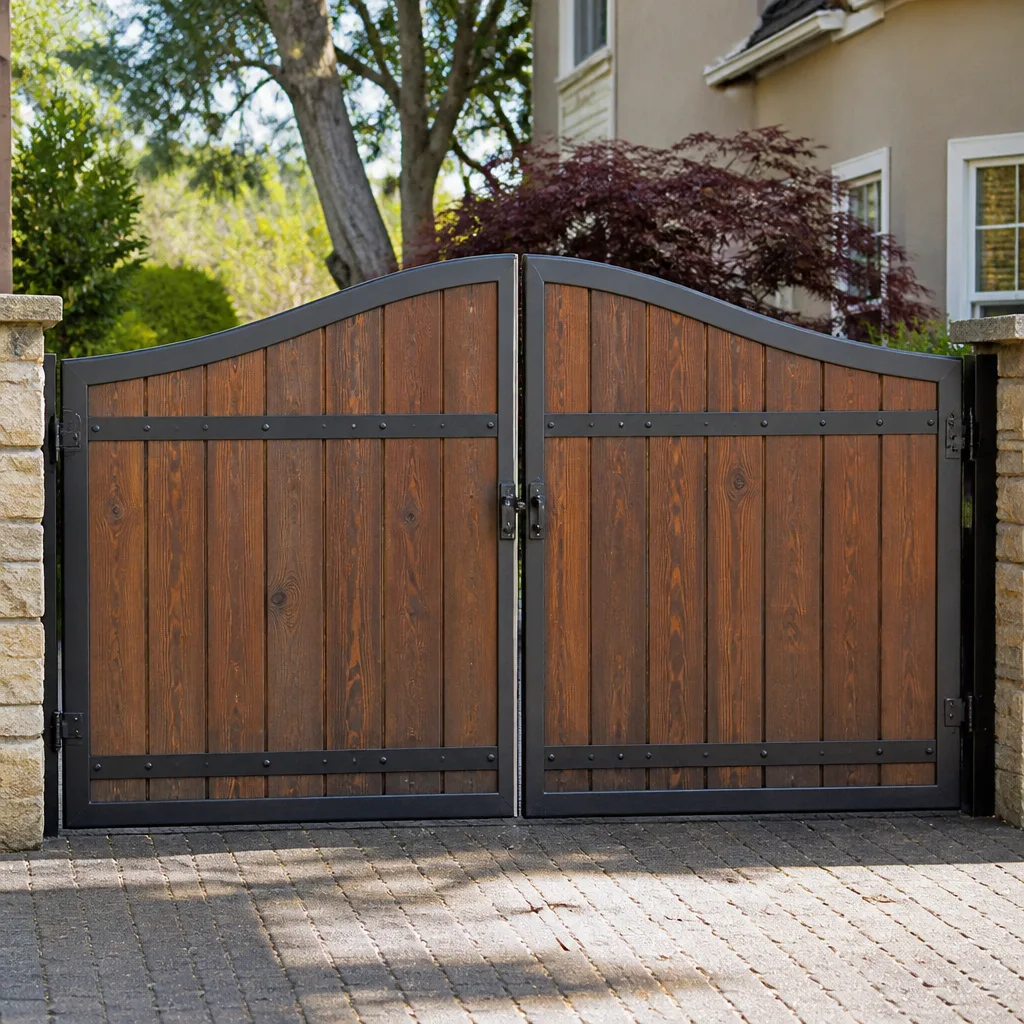 Wood & steel frame
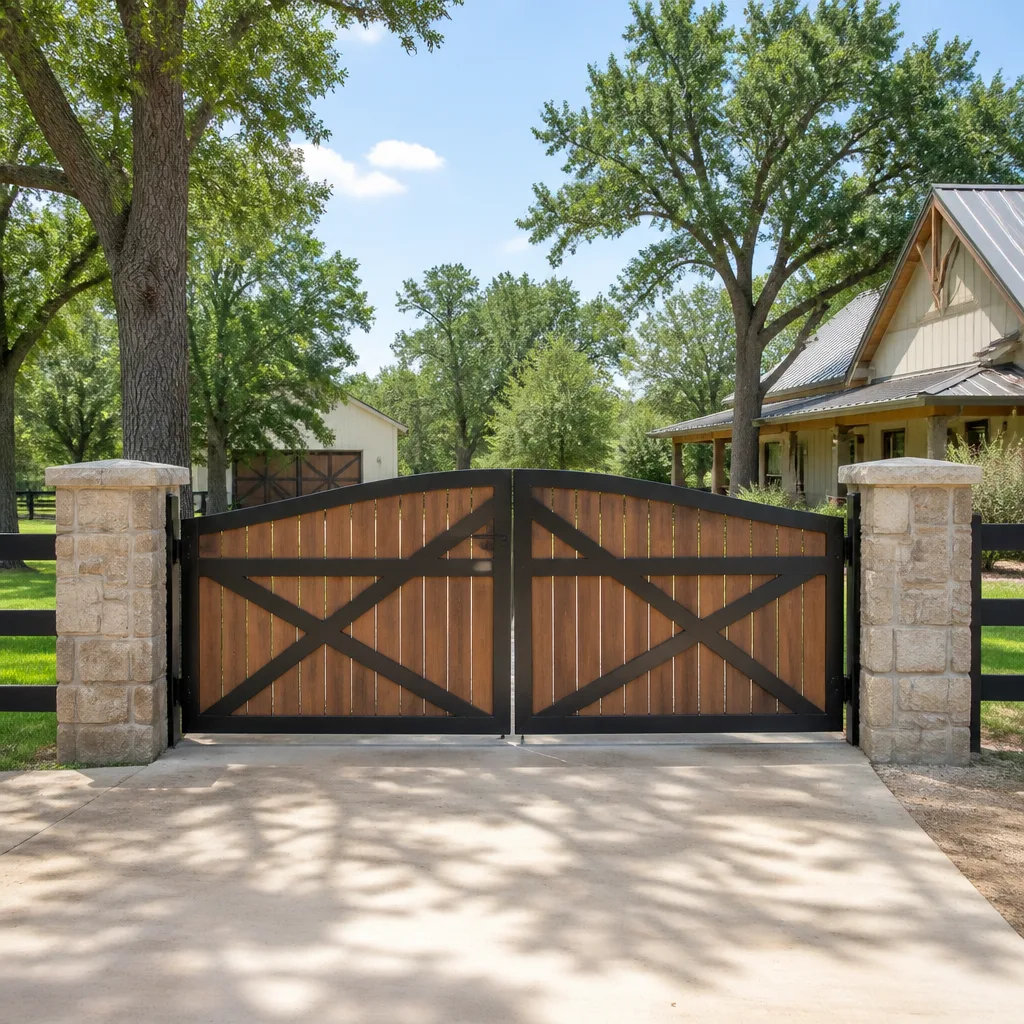 Farm & ranch
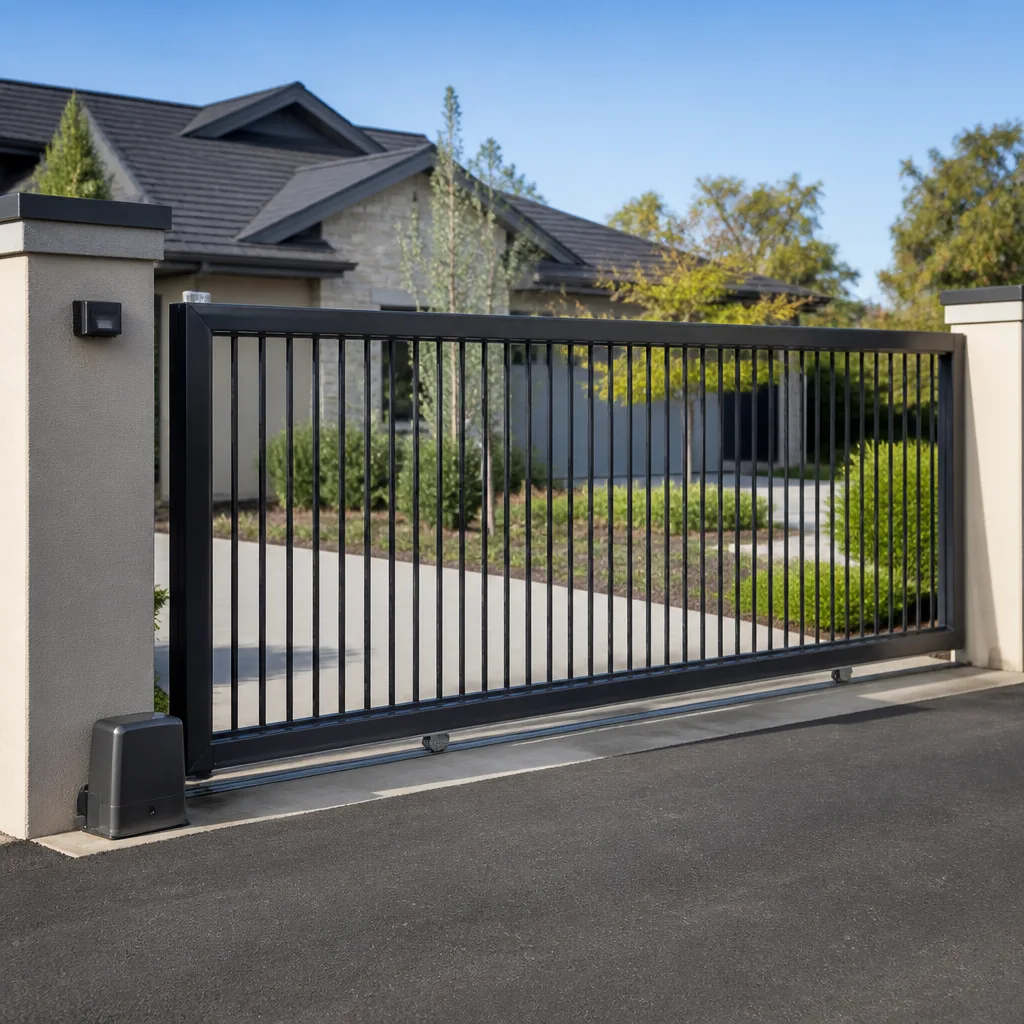 Sliding driveway gates
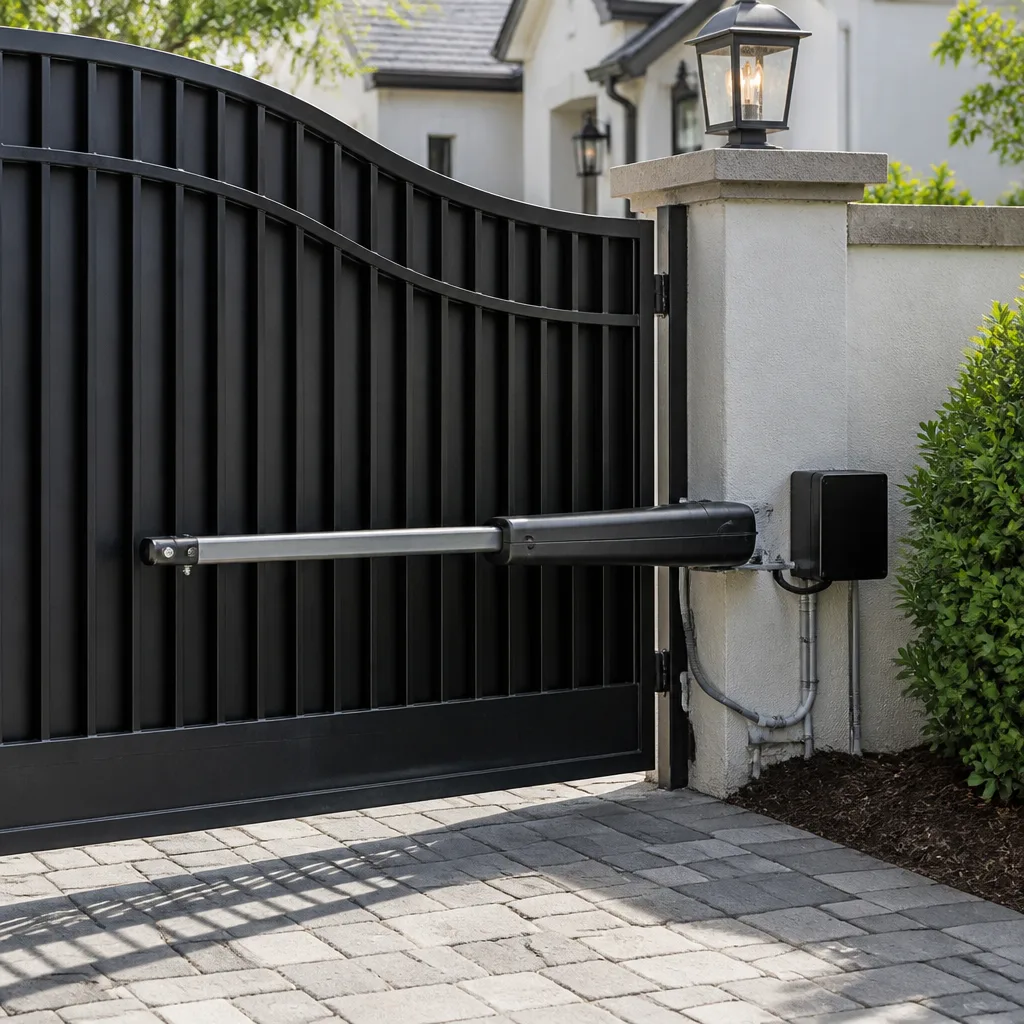 LiftMaster operators
Free on-site gate assessment - hinges, posts, and your LiftMaster or Nice gate operator checked before anything is quoted
The assessment is free and the quote is the invoice.
Get your free estimateSeasonal Gate Repair Care for Austin: Year-Round Homeowner’s Guide
The ice storm that froze Austin in February isn’t the event that breaks most gates. It’s the rapid temperature rebound to 70°F three days later that snaps already-stressed hinges and strips drive gears. Austin doesn’t have four equal seasons. We get a brutal expansion-contraction cycle: 100°F summers that push metal to its limit, surprise winter freezes that introduce ice into every joint, and limestone-heavy clay soil that shifts under gate posts after every wet spell. If you’re treating your gate like a set-it-and-forget-it fixture, the climate here will eventually win. This guide walks you through what to check each season, why it matters for Austin specifically, and how to set up a simple schedule so the maintenance actually gets done. For a deeper dive, see The Complete Guide to Gate Repair in Austin.
Quick Answer
Seasonal gate care in Austin TX means adapting your routine to the city’s real climate pattern: prep for thermal expansion before summer hits, clear cedar and live oak debris each fall, address soil movement and drainage after wet springs, and protect gate opener electronics from freeze-thaw cycles in winter. Most seasonal issues are preventable with a 20-minute inspection every quarter. When hardware fails, gate repair in Austin typically runs from $95 for a basic sensor realignment to $450 for a full opener gear replacement, with parts billed separately.
Styles & brands we work with
Table of Contents
- Spring: What Expansive Clay Soil Does to Gate Posts After a Wet Winter
- Summer: The 100°F Thermal Expansion Problem Nobody Talks About
- Fall: Cedar, Live Oak, and the Debris That Kills Gate Sensors
- Winter: Freeze-Thaw Cycles and Gate Opener Electronics
- How Austin’s Climate Affects Different Gate Opener Brands
- A Reminder System That Actually Works: The 4-Season Gate Calendar
- Signs Your Gate Is Already Stressed by Austin Weather
Spring: What Expansive Clay Soil Does to Gate Posts After a Wet Winter
Spring gate problems in Austin rarely start at the gate itself. They start underground. Austin sits on Blackland Prairie clay, a soil type that swells when wet and shrinks when dry. After winter rains, that clay expands. As spring heat arrives, it contracts. That cycle shifts gate posts, sometimes only a quarter inch, sometimes enough to throw the entire gate out of alignment.
Here’s what we see in neighborhoods across Austin each spring:
- Post lean: The post holding the hinge side tilts outward, making the gate drag on the latch side.
- Concrete pad cracking: When a gate post is set in a concrete pad rather than sunk below the frost line, the pad itself can crack as soil moves beneath it.
- Track misalignment: Sliding gates especially suffer when the track shifts even slightly, causing grinding and strain on the drive gear.
- Sensor drift: Photo-eye sensors mounted on or near the posts lose alignment when posts move, triggering false safety reversals or refusing to close.
Your spring checklist:
- Stand back and eyeball both posts. Is the gate still level, or does it tilt noticeably toward one side?
- Open and close the gate manually (release the opener first). It should move smoothly without binding at any point in the arc.
- Check the gap between the gate and the latch post at the top and bottom. A difference of more than half an inch means post movement.
- If you have a sliding gate, run it slowly and listen for grinding or thumping at any point along the track.
- Check drainage around the posts. Standing water after rain accelerates soil expansion and destabilizes posts.
Most misalignment from soil movement can be corrected with hinge adjustment or track realignment before it damages the opener, or you can rely on our Gate Repair services to handle it. We’ve corrected dozens of these in neighborhoods like Mueller, Circle C, and Allandale where soil composition varies block by block. Catching it in spring costs far less than replacing a stripped gear in August.
Summer: The 100°F Thermal Expansion Problem Nobody Talks About
Steel expands roughly 0.0000065 inches per inch per degree Fahrenheit. Aluminum expands almost twice as much. Over a 12-foot gate that heat soaks to 150°F on a 105°F Austin afternoon, that expansion is measurable, real, and hard on hardware. Gates that operate perfectly at 8 a.m. on a June morning can bind, strain, and eventually fail at 3 p.m. because the metal itself has grown.
Pre-summer prep matters more than any other seasonal task. Here’s why Austin’s specific summer pattern is so demanding:
- Daily temperature swings: Austin regularly swings 30 – 40 degrees from morning low to afternoon high. Expansion happens every single day, not just seasonally.
- Direct sun exposure: Gates on south-facing or west-facing lots absorb more heat, and dark-colored gates are the worst offenders. Surface temps hit 160°F+ on dark steel.
- Opener stress: When a gate expands and binds, the opener motor draws more current. That trips thermal overloads, wears gears faster, and shortens opener lifespan.
- Hinge wear acceleration: Expansion and contraction at hinge points loosens bolts gradually. A loose hinge under load becomes an egged-out hole, then a sagging gate.
- Check hinge bolts: Tighten everything. A quarter turn of looseness becomes a wobble becomes a repair by July.
- Lubricate moving parts: Use a silicone-based lubricant on hinges, rollers, and the chain or belt. Avoid heavy grease that bakes into gunk in heat.
- Test the gate at 3 p.m.: This is the moment of maximum expansion. If it binds in afternoon heat, you’ll know before it becomes an emergency.
- Inspect the opener’s thermal behavior: If your opener shuts off after a few cycles in summer, it’s likely tripping on thermal overload. The gate is binding and the motor is working too hard.
- Check clearance gaps: The gate should have at least half an inch of clearance at the latch and hinge points when cold. Less than that means summer expansion will cause contact.
- Photo-eye blockage: The safety sensors on either side of the gate communicate with an invisible beam. Debris blocking that beam makes the gate refuse to close, or reverse when it shouldn’t.
- Track obstruction: Sliding gates run on a track that collects leaves and twigs. Enough buildup causes the gate to derail or strain the drive motor.
- Limit switch contamination: The limit switch – the small sensor that tells the gate when to stop – can be fouled by debris, causing the gate to stop short or overrun its end point.
- Hinge gumming: Pollen and dust mix with old lubricant to form a sticky paste that increases friction at pivot points.
- Clear the entire gate path weekly during peak leaf drop. This is the simplest prevention you can do and the one most often skipped.
- Wipe photo-eye lenses with a dry cloth. The sticky pollen film is bad enough on your car; it blocks infrared beams too.
- Blow out the track on sliding gates with a leaf blower or compressed air. Don’t use water, which just creates mud in the track.
- Inspect the limit switch housing for debris. If the gate starts stopping in weird positions, debris in the switch is the first thing to check.
- Relubricate after clearing debris, not before. You don’t want to seal pollen into the mechanism.
- Electronics and condensation: Gate opener control boards don’t like moisture. The freeze-thaw cycle creates condensation inside opener housings, which corrodes connections and eventually shorts boards. Check that your opener housing seals are intact.
- Battery backup condition: Many Austin homeowners installed battery backups after the 2021 freeze. Those batteries have a 3 – 5 year lifespan and need checking before winter, not after the power goes out.
- Hinge and joint water intrusion: Anywhere water can sit and freeze, it will damage the surrounding material. Look for rust staining, which tells you water is regularly present.
- Keypad and intercom weather sealing: Exposed keypads crack in freeze-thaw cycles. A cracked keypad lets water directly into the wiring behind it.
- Inspect the opener housing for cracks or failed gaskets and seal any gaps with silicone.
- Test the battery backup by unplugging the opener for 10 minutes and running the gate once on battery power. If it won’t complete a cycle, replace the battery.
- Check all exterior electrical connections for corrosion. Green or white powdery buildup on terminals is an early warning sign.
- March 15 (Spring): Post and alignment check. Look for soil movement damage from winter rains, check post lean, test manual operation.
- May 15 (Pre-Summer): Thermal expansion prep. Tighten hinge bolts, lubricate, test at 3 p.m. in the heat, check clearance gaps.
- October 15 (Fall): Debris clearing and sensor check. Clean tracks, wipe photo-eyes, inspect limit switch, relubricate.
- December 15 (Pre-Winter): Freeze protection. Inspect opener housing seals, test battery backup, check electrical connections for corrosion.
- Grinding or squealing when opening: The gear or chain is binding. Running it this way accelerates wear every single cycle.
- Gate stops mid-cycle and reverses: This is often a photo-eye issue or an obstruction sensor false trigger. If it happens repeatedly in the same spot, check for debris first.
- Slower than normal operation: A gate that used to open in 15 seconds and now takes 25 is telling you the motor is working harder. It’s a warning sign, not a quirk.
- Visible rust at hinges or joints: Surface rust is cosmetic; flaking rust at structural connections is not. Austin’s humidity makes this worse than many people expect.
- Gate sags when fully open: The hinge side is moving or the hinges themselves are worn. Address it before the gate drags and strips the opener gear.
- Opener housing feels hot to the touch after normal use: Warm is normal in Austin summers. Hot enough to make you pull your hand back is a thermal overload warning.
Before summer arrives in Austin, do this:
Most gate opener failures we repair at Calder Gate Repair Austin follow the same pattern: the opener has been quietly working too hard for months due to binding, expansion, or misalignment. Thermal overload is the symptom, not the disease.
Fall: Cedar, Live Oak, and the Debris That Kills Gate Sensors
Ask any Austin homeowner what fall means and they’ll say cedar fever season is coming. For your gate, fall means something else: live oak leaves, cedar needles, and pollen buildup clogging the operating path and photo-eye sensors. Live oaks drop leaves from March through May and again in late fall. Cedar pollen coats everything in a sticky yellow film. Together they create real problems for electric gates.
Here’s what fall debris actually does:
Fall maintenance steps for Austin:
If your gate starts misbehaving in October or November, debris is the most likely culprit. It’s also the cheapest fix: most sensor-related repairs cost under $150 in the Austin area. The expensive version of that failure happens when debris causes repeated false reversals that wear out the opener’s gear train over months of neglect.
Winter: Freeze-Thaw Cycles and Gate Opener Electronics
Winter in Austin doesn’t look like winter in Minnesota, but it’s arguably harder on gate hardware. Freeze-thaw cycles, not sustained cold, do the damage. Water seeps into small cracks and gaps, freezes overnight when temps dip below 32°F, then expands to wedge cracks wider. When it warms again, the water goes deeper. Repeat this a dozen times in a typical Austin winter and hardware that was fine in September is compromised by February.
What to focus on for winter prep, without over-engineering it:
For most Austin homeowners, winterizing a gate opener means three simple tasks:
One thing you don’t need to do in Austin: drain the gearbox and replace it with winter-weight oil. That’s a northern climate practice. Most modern gearboxes handle Austin winter temperatures without issue. The bigger risk in this city is moisture, not cold alone. If you’re unsure whether your opener electronics are properly sealed, electric gate repair in Austin can diagnose it before a freeze damage event, not after.
How Austin’s Climate Affects Different Gate Opener Brands
Not all gate openers handle Austin weather equally. The combination of intense summer heat, occasional hard freezes, and high humidity loads the electronics and mechanicals differently depending on brand and design. Our techs work on nine major brands, and the failure patterns we see in the Austin market are fairly consistent.
Mighty Mule: The most common residential DIY opener in Austin. The factory gearboxes are thermoplastic, which holds up fine to heat but becomes brittle in hard freeze. We see a lot of Mighty Mule units with stripped gears in spring, which is almost always the result of a gate that was binding during winter freeze cycles and a plastic gear that lost the fight. The electronics on these units are also more exposed to condensation than enclosed professional-grade openers.
LiftMaster: Built for durability, and it shows. The failure pattern in Austin is mostly capacitor aging in extreme heat. Capacitors have a temperature rating, and operating continuously at 110°F+ ambient shortens their life. If your LiftMaster opener starts hesitating to start, especially in summer, a failing capacitor is the likely culprit.
FAAC: These are hydraulic and electromechanical units, popular on larger and heavier gates in Austin’s hill country properties. The hydraulic units handle heat well, but the freeze-thaw cycle can stress seals and cause slow fluid leaks. Owners should watch for any oily residue near the piston or reservoir in winter and spring. FAAC electronics are generally well-sealed, but condensation in the control enclosure is still a risk when the housing sits in direct morning sun after a freezing night.
BFT: Common on multi-unit and HOA gates around Austin. The gearbox designs are solid, but we see more limit switch failures on BFT than on most other residential brands. Austin’s dust and pollen load doesn’t help: the switch contacts get contaminated over time, causing erratic stop positions. Cleaning and replacing limit switches is one of the most common BFT repairs in this market.
Every brand has a weak point. What matters more than brand choice is keeping the gate itself moving freely, because a binding gate kills any opener regardless of the logo on the cover. If your opener fails, understanding the brand-specific failure pattern helps you ask the right questions when you call for service. Not sure whether to DIY or call a pro? Read DIY vs Professional Gate Repair: The Austin Homeowner’s Decision Guide.
A Reminder System That Actually Works: The 4-Season Gate Calendar
Every seasonal gate maintenance guide tells you what to do. Almost none tell you how to remember to do it. Austin homeowners are busy people. The seasonal checks in this guide take 20 minutes each, but only if they actually happen. Here’s a simple reminder system that works without cluttering your calendar with alerts you’ll ignore.
Set four recurring calendar events, one per season, on these dates:
These dates matter. March 15 lands after Austin’s wettest winter months and before spring heat. May 15 is before the first real stretch of 100°F days. October 15 is mid-fall leaf drop. December 15 is before the first hard freeze typically hits Central Texas.
Set each reminder with a specific task list in the event notes so you don’t have to remember what to check. The entire process for each season takes under 30 minutes. Skipping one season is how gates get into trouble: the problem that shows up in August started forming in March.
Signs Your Gate Is Already Stressed by Austin Weather
Before you get to the seasonal checklists, know what a weather-stressed gate looks and sounds like. These are the signals we hear about most from Austin homeowners who call after a failure that could have been prevented:
Any of these symptoms warrant a closer look. Several of them can be fixed in under an hour if caught early, and most turn into $300+ repairs if ignored for a season.
Common Mistakes to Avoid
- Skipping manual tests: Running the gate manually tells you things the opener masks. If the gate is binding manually, the opener has been fighting it silently.
- Lubricating without cleaning first: Adding lubricant over dirt and pollen creates abrasive paste. Always clean, then lubricate.
- Ignoring photo-eye misalignment: A gate that won’t close is annoying, but the “fix” of taping the sensors together or bypassing them creates a safety hazard. Misaligned sensors are a realignment job, not a bypass job.
- Waiting until a freeze to check the battery backup: Austin power outages in winter are a reality. Testing your backup in December beats finding out it’s dead during an ice storm.
- Using heavy grease on gate hardware: In Austin’s summer heat, heavy grease melts and collects dust. Silicone-based lubricants hold up better in this climate.
- Ignoring drainage around gate posts: Standing water is the enemy of post stability in expansive clay soil. The post may look fine until the gate stops latching, and by then the damage is done.
- Assuming the opener is dead when the problem is the gate: The most expensive repair is the one you didn’t need. A gate that binds due to misalignment will kill a new opener just as fast as it killed the old one.
See the difference
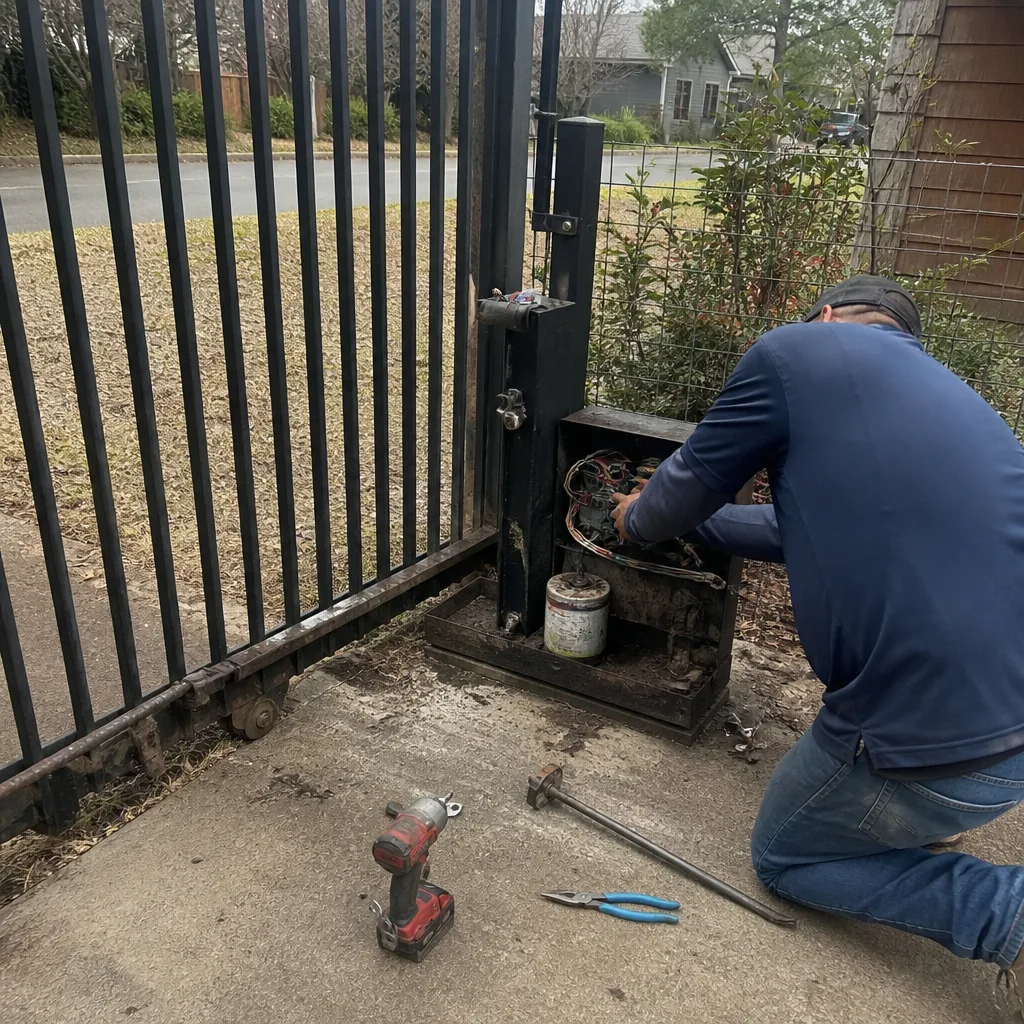 Before
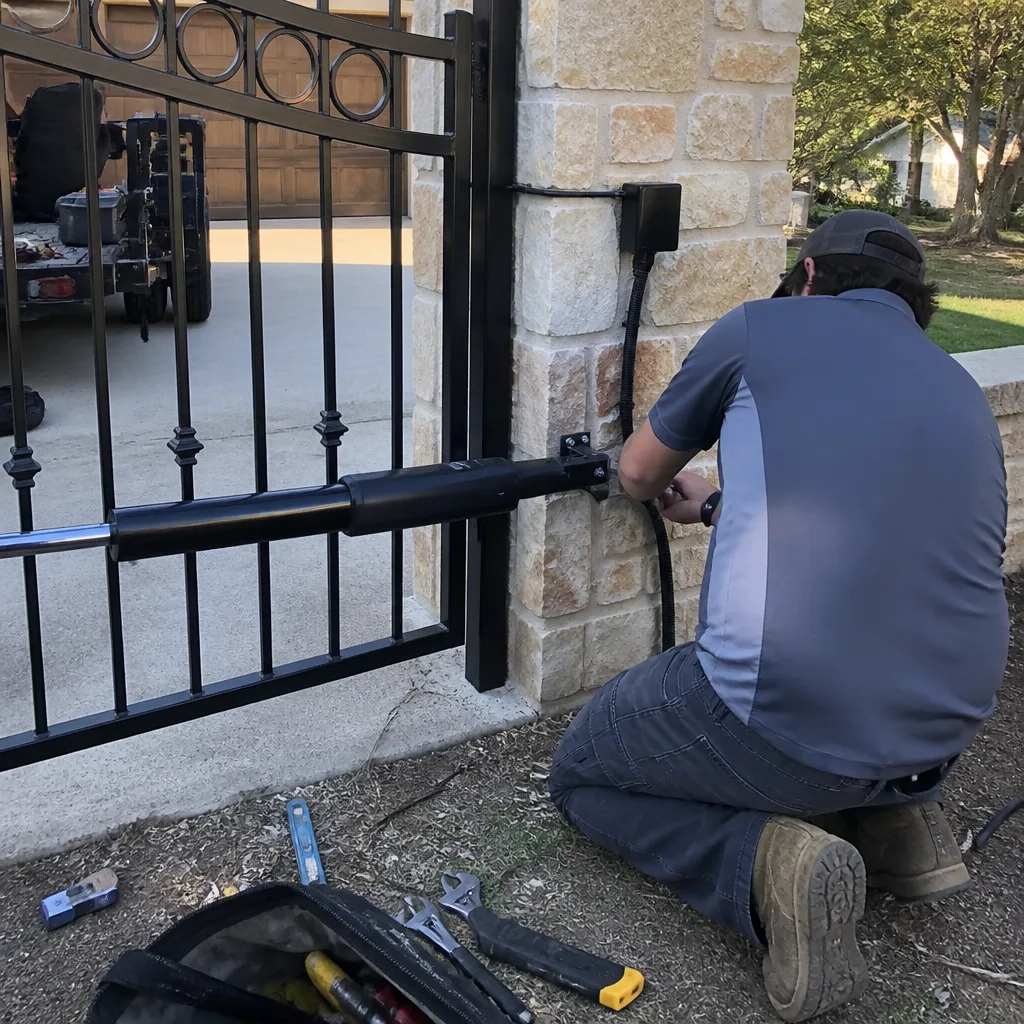 After
After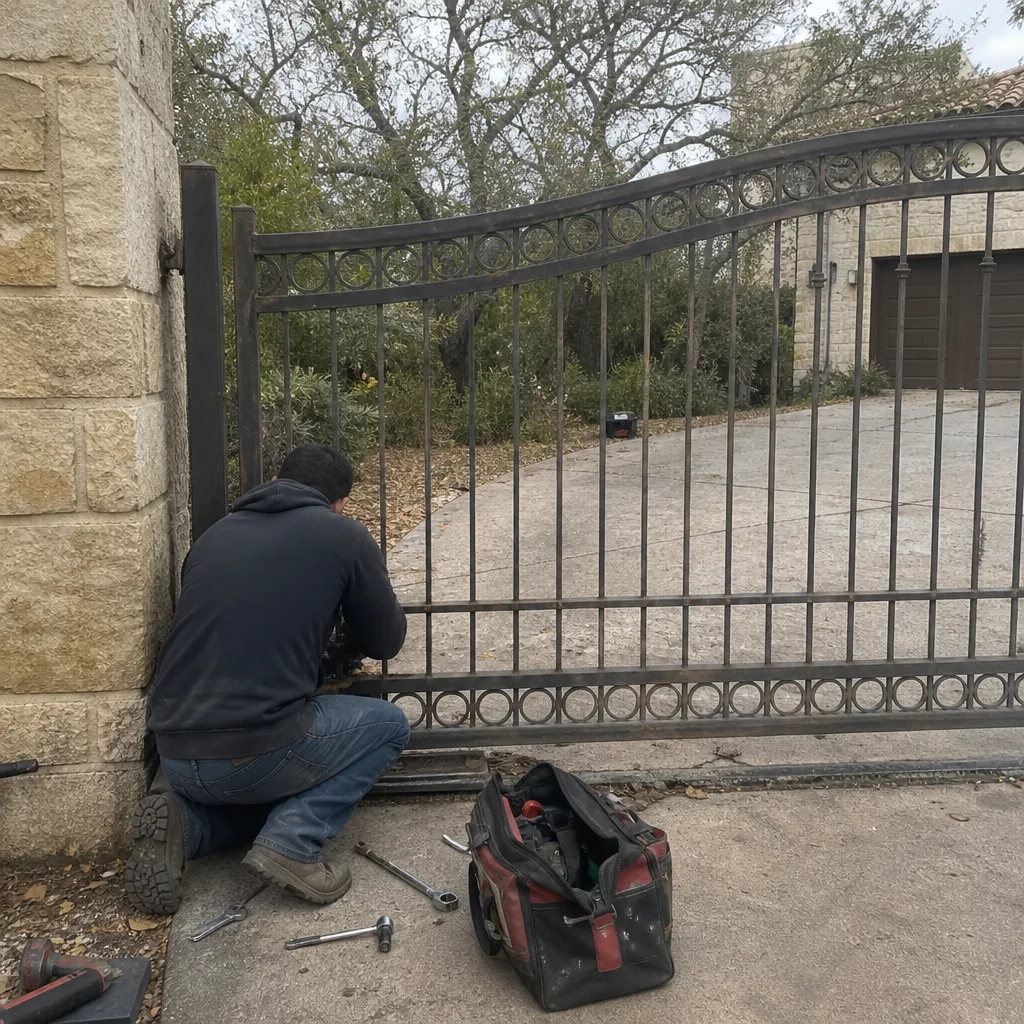 Before
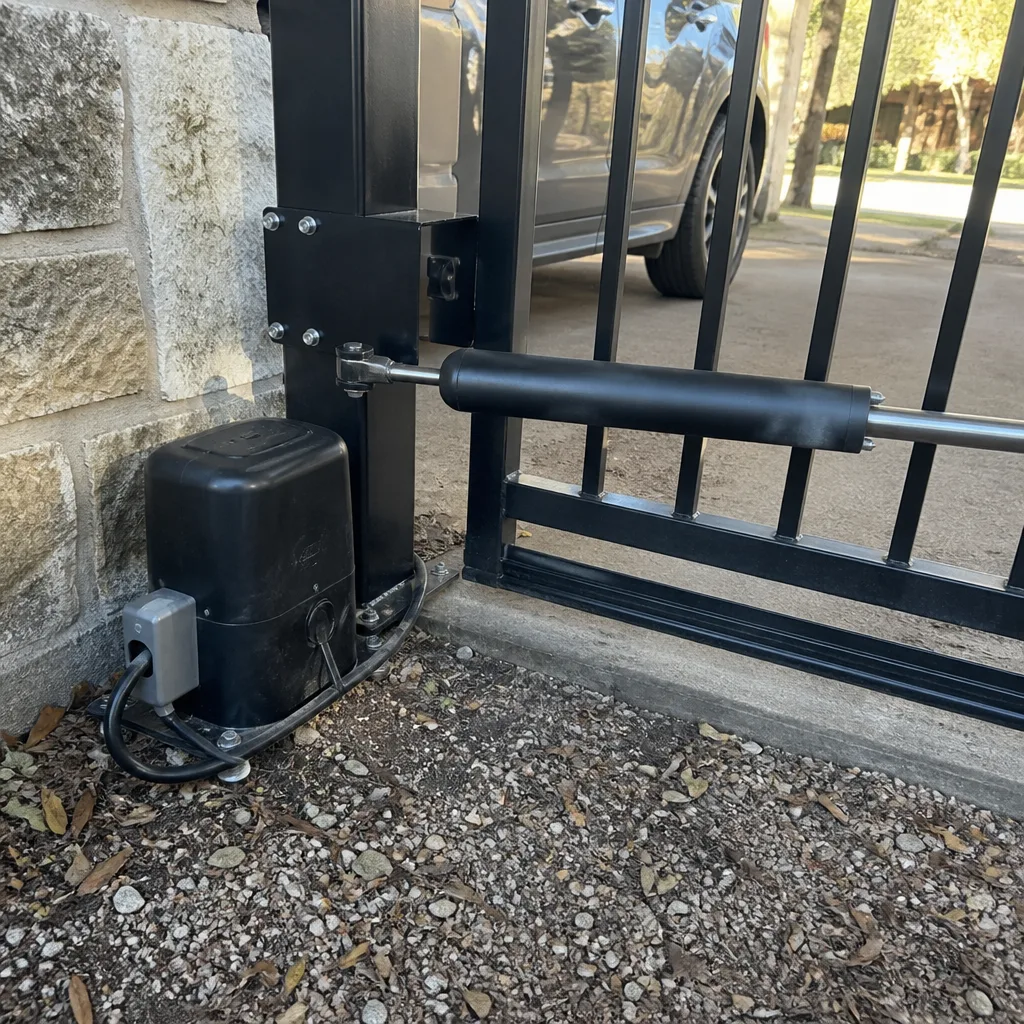 After
After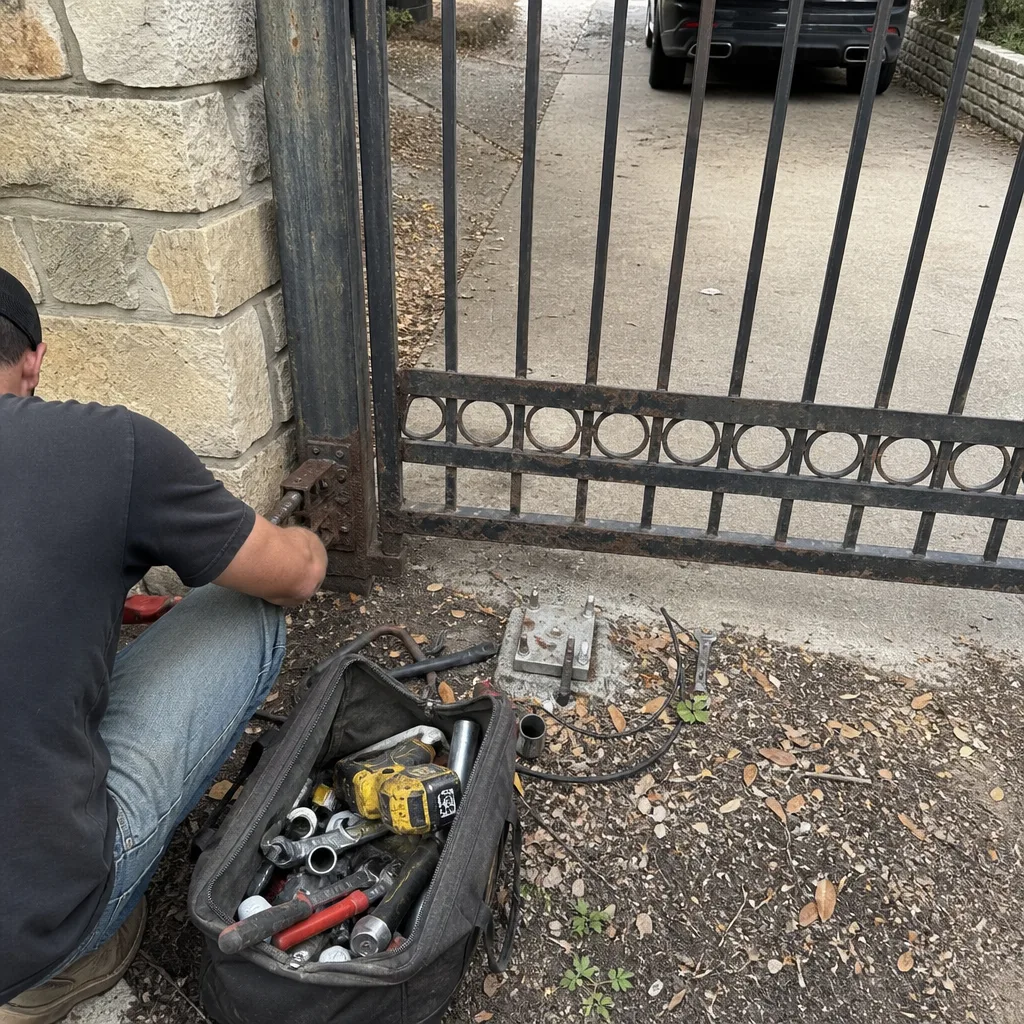 Before
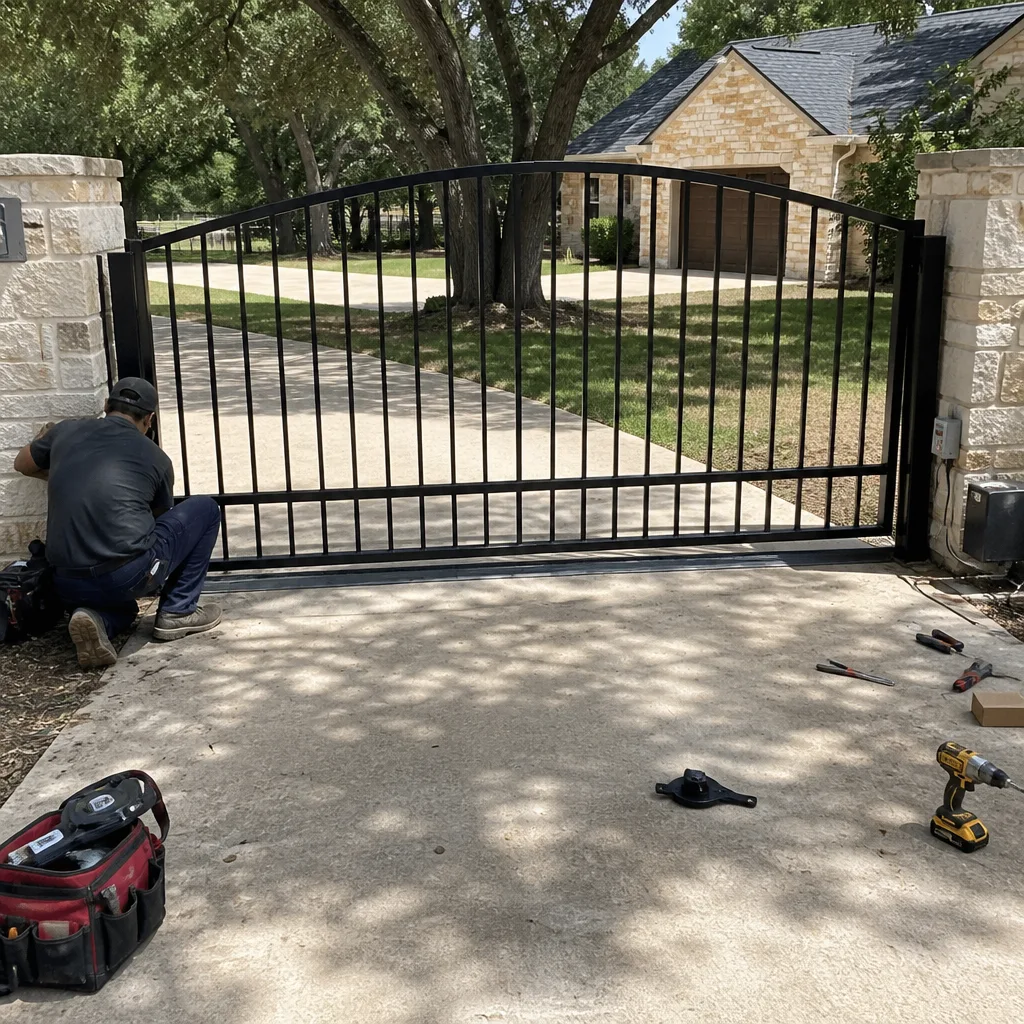 After
AfterWhen to Call a Professional
Some seasonal gate tasks are DIY-friendly: clearing debris, wiping sensors, tightening visible bolts, testing operation. Others are not. If you find a post that has shifted significantly, a gearbox that’s grinding, a control board showing corrosion, or an opener that won’t complete a cycle even after the checklist items are done, call someone who does this every day. Gate opener springs, high-tension chains, and sliding gate rollers under load can cause serious injury if they fail mid-repair, and a control board diagnosis requires specialized testing equipment. Calder Gate Repair Austin offers free estimates in Austin, we’re at Calder Gate Repair Austin, and you can reach a live person at (903) 354-7419 any hour. Written price before any work starts, every time.
Frequently Asked Questions
Four times a year, once per season, is right for Austin’s climate. Each seasonal check takes 20 – 30 minutes and targets a different risk: soil movement in spring, thermal expansion in summer, debris in fall, and freeze-thaw protection in winter. If you only do one check per year, make it the May pre-summer inspection, because summer heat causes the most expensive failures in the Austin area.
A professional seasonal gate inspection and tune-up in Austin typically runs $95 – $185 depending on gate size and opener type. If the inspection finds a problem, repairs are quoted separately before any work begins. Call (903) 354-7419 for an exact quote, estimates are free.
Gear stripping from thermal expansion binding is the most common heat-related gate failure we see in Austin. When the gate binds in afternoon heat, the opener motor strains against it, and the gear train is the point of failure. The prevention is a pre-summer clearance check and hinge tightening in May.
Yes, but not the same way northern states do. In Austin, the goal of winter prep is moisture management: sealing opener housings against condensation, checking battery backups, and inspecting for water intrusion at joints. These three tasks take about 15 minutes and can prevent freeze-thaw cycle damage.
Mighty Mule openers have thermoplastic gearboxes, which work fine in heat but can become brittle during hard freezes. The common failure pattern in Austin is a stripped gear after winter binding. Keep the gate moving freely and the failure risk drops significantly for any brand, including Mighty Mule.
First, switch the opener to manual mode if possible and operate the gate by hand to confirm the gate itself moves. If the gate moves manually, the problem is the opener or its electronics; if it doesn’t, the gate is iced or bound. Don’t force a frozen gate open, as the hinge stress can cause permanent damage. Wait for thaw or call (903) 354-7419, and a live person will help you troubleshoot.
The Bottom Line
Seasonal gate care in Austin succeeds when it mirrors the city’s actual climate rhythm rather than a generic four-season template. Spring means watching for clay soil movement under posts. Summer means thermal expansion checks before the first 100°F stretch. Fall means clearing cedar and live oak debris from tracks and sensors. Winter means sealing moisture out and testing battery backup. Fifteen minutes, four times a year, on the dates in this guide. That’s the difference between a gate opener that lasts 7 years in the Austin climate and one that dies at year 4. When something’s beyond the seasonal checklist, Calder Gate Repair Austin handles it with a written price before any work starts and a 365-Day Done Right Promise that backs every repair in writing. Want more guides & resources? Our blog covers Austin-specific gate care in depth. Call (903) 354-7419 for a free estimate.
Written by Nico Alvarez, Owner at Calder Gate Repair Austin, serving Austin since 2009.