
Last updated October 16, 2026
 Wrought iron
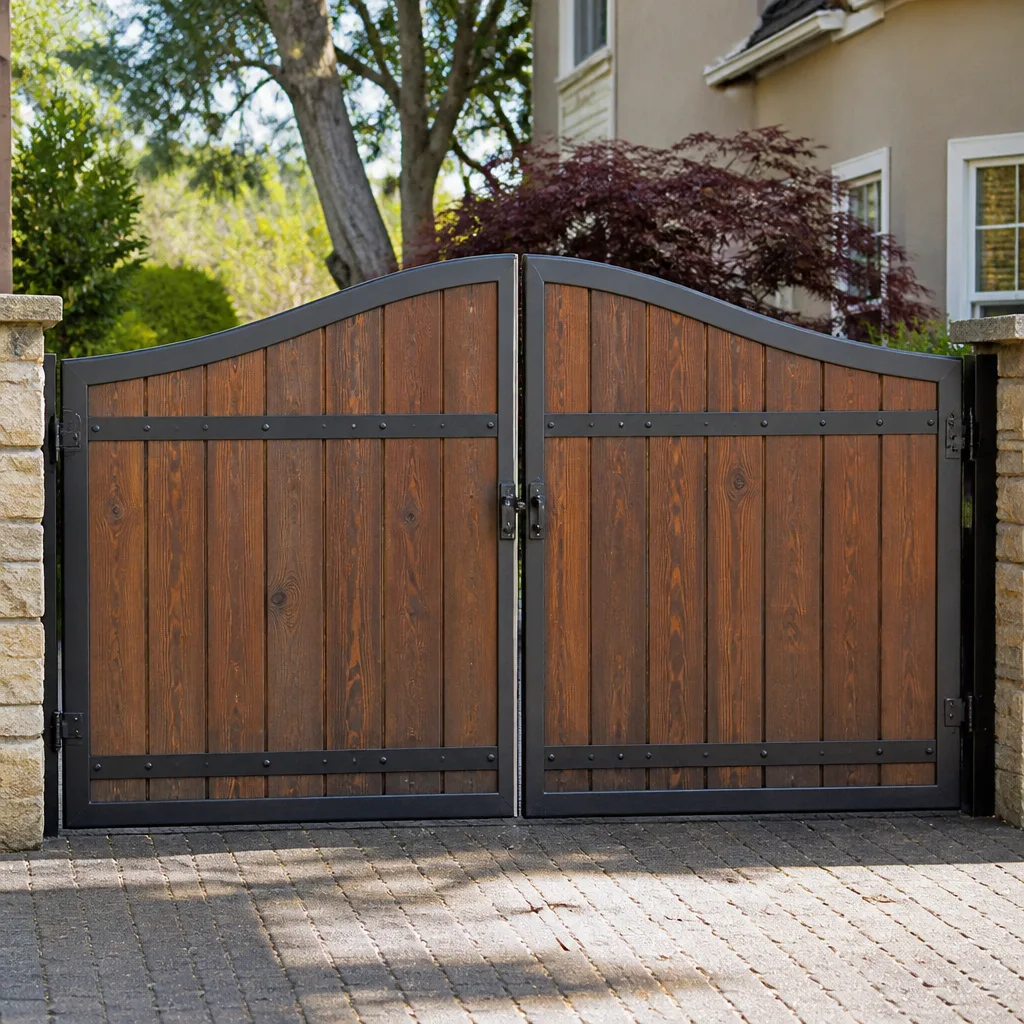 Wood & steel frame
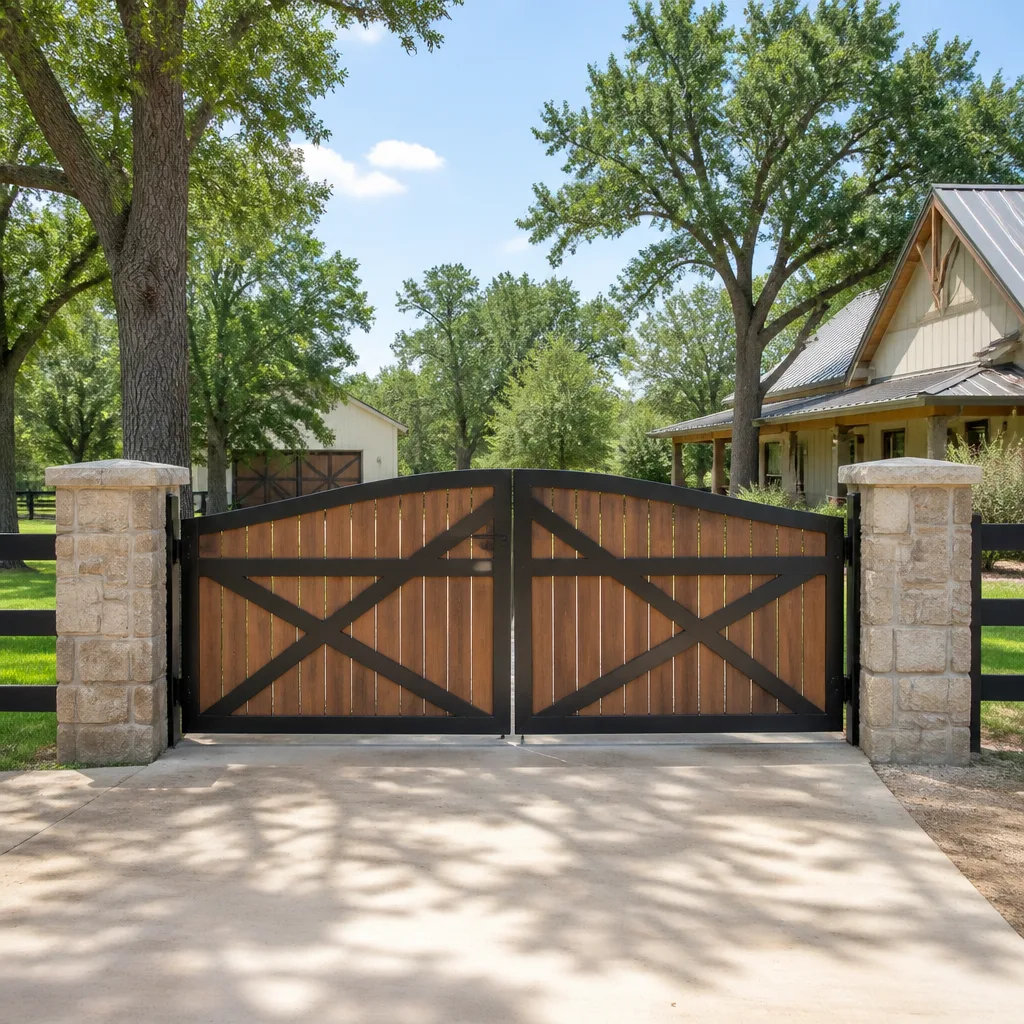 Farm & ranch
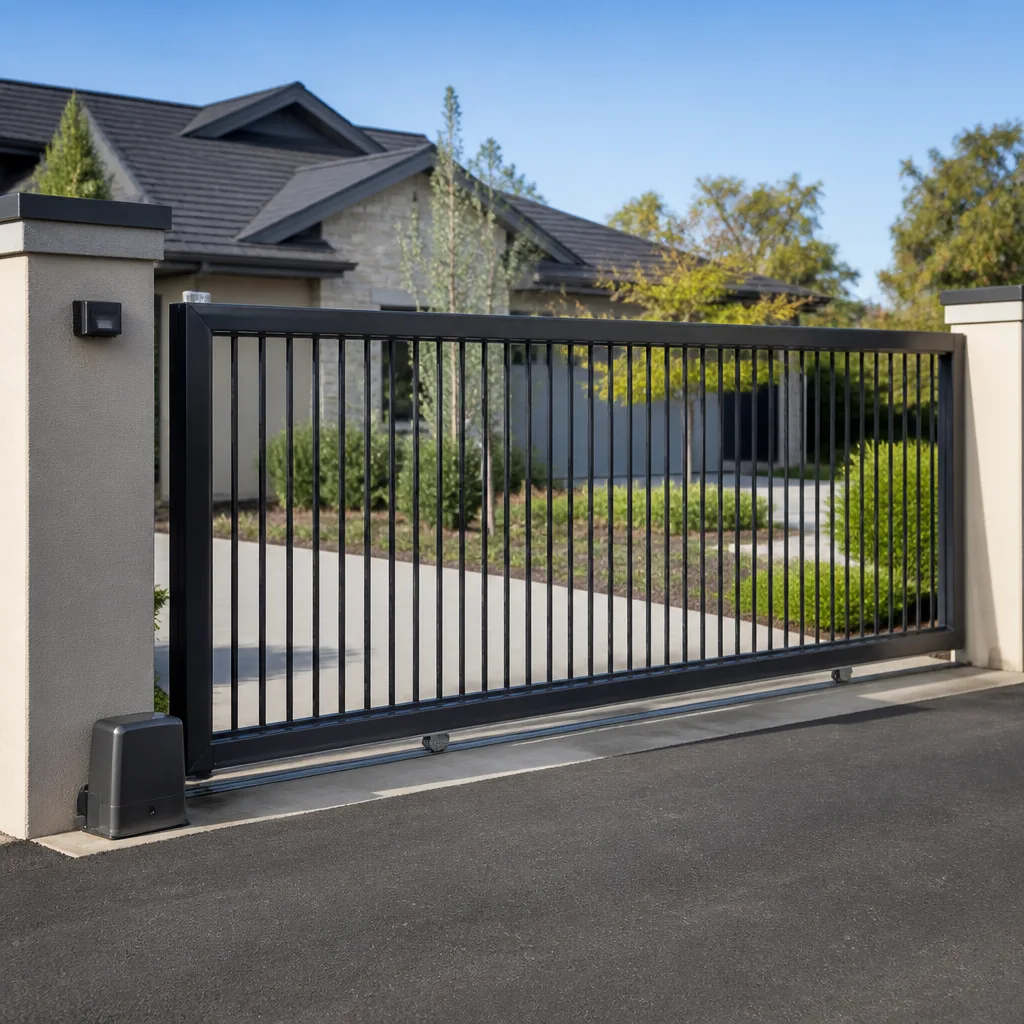 Sliding driveway gates
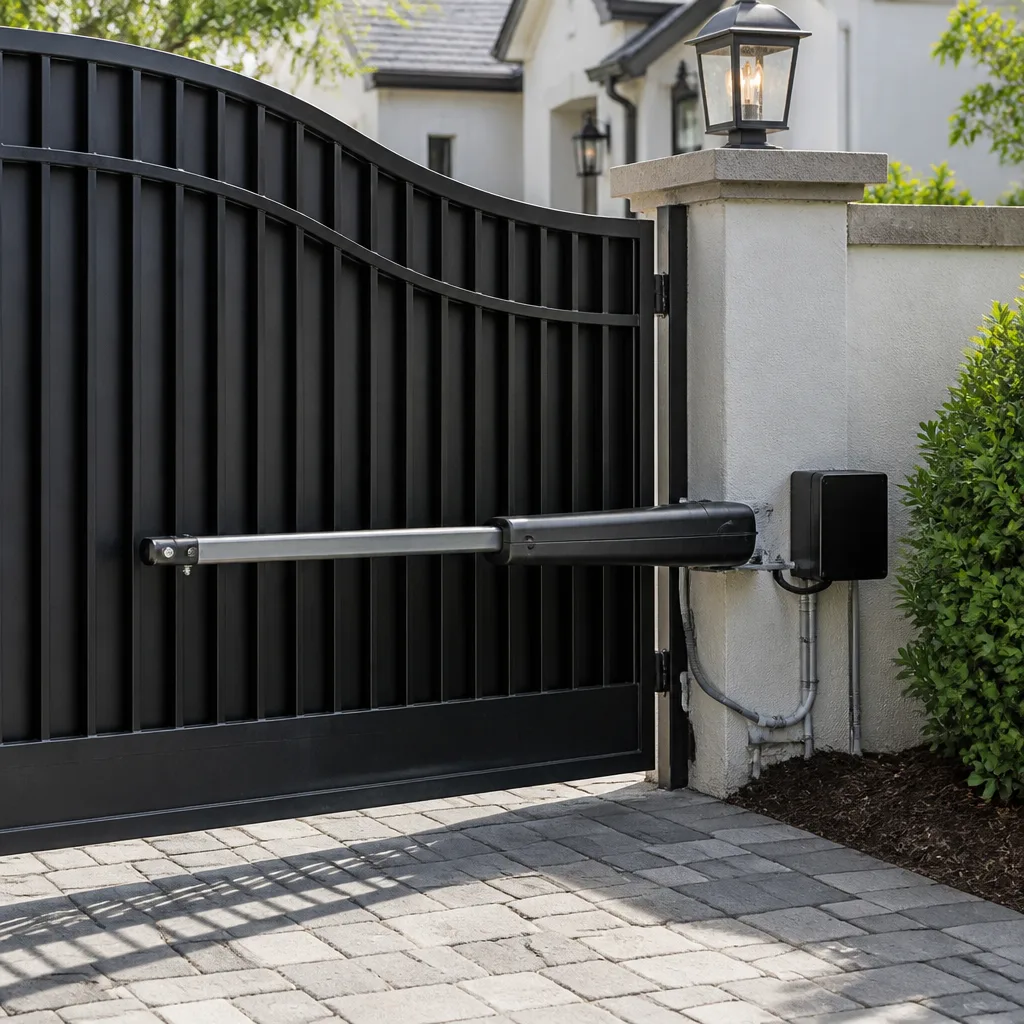 LiftMaster operators
Free on-site gate assessment - hinges, posts, and your LiftMaster or Nice gate operator checked before anything is quoted
The assessment is free and the quote is the invoice.
Get your free estimateThe Complete Guide to Gate Repair in Austin
Most Austin gate repair calls get misdiagnosed on the first visit. Not because the technician lacks skill, but because they show up without knowing whether they’re staring at a LiftMaster swing arm, an Elite slide operator, or a FAAC hydraulic system. Each of those brands fails in different ways, needs different parts, and responds to different fixes. When a repair person guesses, you pay for the guess. This guide maps the actual repair landscape in Austin so you can match your specific gate type, opener brand, and failure pattern to the right fix the first time. No fluff, no brand-speak, just what we’ve learned fixing gates across this city.
Styles & brands we work with
Quick Answer
Gate repair in Austin typically costs $150 to $450 for common opener and hinge fixes, with full opener replacements running $800 to $2,500 depending on brand and gate weight. Most repairs take under two hours once the right part is in hand, and the single biggest factor in getting it fixed correctly the first time is whether the technician actually knows your opener brand. Calder Gate Repair Austin provides written pricing before any work starts, covers every repair with a 365-Day Done Right Promise, and sends a second visit free if the fix fails.
Table of Contents
- How Austin’s Climate Creates Unique Gate Problems
- The Nine Major Gate Opener Brands and Their Common Failures
- Gate Repair vs. Gate Adjustment vs. Gate Replacement
- What a Legitimate Austin Gate Repair Estimate Should Include in Writing
- Red Flags in Austin’s Gate Repair Market
- How We Diagnose a Gate Problem: Step-by-Step
- Common Mistakes to Avoid
- When to Call a Professional
- Frequently Asked Questions
- The Bottom Line
How Austin’s Climate Creates Unique Gate Problems
Austin is not a gentle place for a gate. We see repair patterns here that gate techs in Dallas or Houston rarely encounter. The combination of limestone-heavy clay soil, cedar pollen, and triple-digit summers produces failure modes that are distinctly Central Texas. Understanding these environmental factors helps you predict what will break on your gate and when.
The clay soil is the silent culprit behind most structural gate issues in Austin. Clay expands when wet and contracts when dry, and the moisture swings between spring rains and August drought cause the ground to shift measurably. Gate posts set in concrete can heave or tilt over just two or three seasons. When a post moves even a quarter inch, the gate leaf sags, the latch stops aligning, and the opener motor strains against a load it was never designed to handle. We regularly see gate posts in neighborhoods like Allandale and Crestview that have drifted far enough to crack the concrete footing. The fix is never just pushing the gate back; it usually requires pulling the post, re-setting it deeper, and sometimes pouring a larger footing.
Cedar pollen deserves its own paragraph. From December through February, Austin’s juniper trees release clouds of fine, waxy pollen that coats everything. Gate opener circuit boards and limit switches are not sealed against this. The pollen works its way into sensor housings and photo-eye lenses, causing intermittent failures that mimic electrical problems. A technician who doesn’t know Austin might replace a $180 control board when the real fix is five minutes with contact cleaner on a pollen-fouled limit switch. The limit switch, by the way, is the small sensor that tells the gate when to stop moving. When pollen blocks it, the gate either stops short or overtravels and slams.
Heat is the third environmental factor. Austin summers push gate opener motors and capacitors well past their comfortable operating range. Capacitors, the small cylindrical components that give the motor its starting jolt, fail regularly in July and August. We replace more capacitors in one Austin summer than we do all winter. The heat also degrades the plastic gears inside consumer-grade openers like Mighty Mule units, which are popular on ranches and acreage properties around Dripping Springs and Manchaca. When a plastic gear strips in 104-degree heat, the motor runs but the gate doesn’t move, a confusing failure for homeowners who hear the hum but see nothing happen.
The Nine Major Gate Opener Brands and Their Common Failures
Calder Gate Repair trains its technicians on nine gate opener brands: LiftMaster, FAAC, BFT, Linear, Viking, Ghost Controls, DoorKing, Elite, and Mighty Mule. That covers virtually every opener a homeowner in Austin is likely to own. Each brand has a distinct personality, and knowing the brand before you arrive changes the entire repair strategy. Here is what we see most often in Austin specifically, broken down by the brands that dominate the local market.
LiftMaster: The most common residential opener in Austin subdivisions, especially in newer builds around Mueller and Easton Park. LiftMaster openers are generally reliable, but their swing-arm models have a known weakness in the arm bracket where it connects to the gate leaf. The bracket metal fatigues over time, and the result is a gate that sags or stops partway through its arc. LiftMaster units also have a tendency to lose their travel limits after power outages, requiring a re-learn procedure that takes about fifteen minutes with the right instructions.
FAAC: FAAC openers are the workhorses of Austin’s larger estate gates and commercial properties. They are hydraulic or electromechanical units built for heavy, frequent use. When a FAAC fails, it’s usually the hydraulic pump seals or the control board capacitors. FAAC parts are more expensive than most, which is why a written estimate matters. You don’t want to discover after the fact that a FAAC repair ran $900 when a LiftMaster equivalent would have been $300.
Elite: Elite gate openers are popular in Austin’s hill country properties, especially in the Lake Travis and Bee Cave areas. These are heavy-duty slide gate operators designed for long, heavy gates. The most common Elite failure in Austin is the drive chain or belt tension system, which loosens over time as the gate cycles. A loose chain causes jerky movement and, eventually, a gate that stalls mid-travel. The good news is that chain tension is an adjustment, not a replacement, when caught early.
Mighty Mule: Mighty Mule is the go-to for rural properties around Austin, from Buda to Georgetown. These solar-friendly, battery-powered openers are affordable and easy to install, which also means they’re often installed incorrectly. We see two recurring issues with Mighty Mule systems: undersized solar panels that can’t keep the battery charged through a Central Texas summer, and stripped plastic drive gears from gates that are too heavy for the opener’s rating. A Mighty Mule repair is usually a worn gear or a dead battery, both straightforward fixes when you know the brand.
The lesson across all nine brands: the repair path diverges immediately based on the brand and model. A technician who shows up without knowing whether they’re working on a Viking or a Ghost Controls unit is already behind. When you call a gate opener repair specialist in Austin, ask if they carry parts for your specific brand before you schedule.
| Brand | Common Austin Failure | Typical Repair Cost | Parts Availability |
|---|---|---|---|
| LiftMaster | Worn swing-arm bracket, lost travel limits | $180 – $340 | Readily available |
| FAAC | Hydraulic seal leak, capacitor failure | $350 – $900 | Special order, 3-5 days |
| Elite | Loose drive chain, belt tension drift | $200 – $450 | Available locally |
| Mighty Mule | Stripped plastic gear, dead battery | $120 – $280 | Readily available |
These are real price ranges from our Austin service calls. Parts availability matters because a FAAC seal kit can take a week to arrive if the supplier doesn’t stock it locally, while a Mighty Mule gear is often on the shelf at a local distributor.
Gate Repair vs. Gate Adjustment vs. Gate Replacement
This distinction is where Austin homeowners lose the most money. A repair means replacing a failed component: a broken hinge, a dead capacitor, a stripped gear, a burned-out motor. An adjustment means correcting an existing component that has drifted out of spec: tightening a chain, realigning a sensor, re-leveling a sagging gate leaf. A replacement means the entire gate or the entire opener unit has reached the end of its serviceable life and needs to come out.
Here is why the distinction matters. An unethical operator can classify a simple adjustment as a repair and charge you repair labor rates for what is essentially a maintenance task. On the flip side, a well-meaning handyman might keep adjusting a gate opener that truly needs replacement, and you end up paying for five service calls when one replacement would have solved it permanently.
In our experience across Austin, roughly a third of the calls we get for what customers describe as a broken gate are actually adjustment issues. A gate that stops halfway, a gate that beeps but doesn’t move, a gate that reverses at the wrong point, these are often adjustment fixes that take under an hour and cost under $200. The incentive for a less scrupulous company to call it a $500 repair is obvious. That’s why we put the price in writing before a single bolt is turned, and why the diagnosis is part of the service, not an extra line item.
When does replacement make sense? A good rule of thumb: if the opener is over ten years old and the repair cost exceeds half the cost of a new unit, replacement is usually the smarter money. If the gate itself has rusted through at the hinge mounts or the frame has twisted beyond re-leveling, patching it is throwing good money after bad. Austin’s humidity swings accelerate rust on older steel gates, especially in shaded yards where moisture lingers.
What a Legitimate Austin Gate Repair Estimate Should Include in Writing
Before anyone touches your gate, you should have a written estimate that specifies the scope of work in plain language. If a company won’t put it in writing, that’s your cue to call someone else. Here is what a legitimate gate repair estimate in Austin should contain, line by line.
- The exact problem found. Not just “gate not working.” The estimate should say “upper hinge bushing worn, causing 1.5-inch sag at latch end.” Specificity is the tell of a real diagnosis.
- The proposed fix. “Replace upper hinge bushing, re-level gate leaf, verify latch alignment.” Again, specific. Vague language like “repair gate” is a red flag.
- Parts cost, itemized. Brand and part number where applicable. “LiftMaster K75-10065 swing arm bracket: $68” is what you want to see.
- Labor cost, itemized. Hours or flat rate, stated up front. No “we’ll see how it goes.”
- The total, stated as the number you will pay. Not “starting at” or “as low as.” The final number.
- Warranty terms in writing. What’s covered, for how long, and what happens if the repair fails. Calder Gate Repair puts the 365-Day Done Right Promise in writing on every job: if the repair isn’t right within 365 days, we return at no charge.
Every one of our estimates includes a written price before any work starts. That’s the number on the invoice, not a penny more. If a part turns out to be more expensive than the estimate allowed, we call you first and get approval before proceeding. No exceptions. That’s the Relay Standard: live arrival time, before-and-after photos, and a digital invoice you pay from a link.
Red Flags in Austin’s Gate Repair Market
Austin’s gate repair market is fragmented. Unlike plumbing or HVAC, gate repair doesn’t have the same licensing infrastructure, which means the barrier to entry is low. Anyone with a pickup truck and a socket set can print business cards that say “gate specialist.” Here are the red flags we see most often, and they’re specific to how the market operates in Austin.
No brand knowledge. A legitimate gate technician can tell you which opener brands they service without pausing. Ask: “Do you work on FAAC openers?” If the answer is a hesitant “uh, yeah, we do all brands,” that’s not a specialty. That’s a handyman who will Google your opener model after they hang up. The nine brands we train on, LiftMaster, FAAC, BFT, Linear, Viking, Ghost Controls, DoorKing, Elite, and Mighty Mule, represent the vast majority of what’s installed in Austin. If a company can’t name the brand they’re coming to fix, they’re guessing.
No physical estimate. We covered this above, but it bears repeating. An oral estimate is not an estimate. It’s a conversation. Get it in writing.
Cash-only or “special discount today” pricing. Legitimate Austin gate repair companies take cards, provide invoices, and don’t pressure you into a same-day decision. The “today only” discount is a classic tactic to get you to commit before you’ve had a chance to compare.
No warranty on the repair. If a gate technician won’t stand behind their work in writing, the repair wasn’t done correctly. Our 365-Day Done Right Promise is not optional. It’s on every single job we do. If the repair fails within a year, the second visit is free, no questions, no fine print.
Unlicensed electrical work on opener wiring. Gate openers involve line voltage wiring. In Austin, electrical work connected to a gate opener should be done by someone who knows the code. A qualified electric gate repair service in Austin will handle the low-voltage control wiring and the line-voltage supply correctly. If your technician is splicing wires with electrical tape and a shrug, that’s a fire hazard waiting to happen.
How We Diagnose a Gate Problem: Step-by-Step
Understanding how a professional approaches gate diagnosis helps you ask the right questions and spot a technician who’s cutting corners. Here is the process we follow on every Austin service call, in order.
- Listen to the symptom first. Before we touch anything, we ask you exactly what the gate did, when it started, and whether it’s intermittent or constant. An intermittent failure usually points to a sensor or limit switch issue. A constant failure usually points to a motor, gear, or power supply problem.
- Check the power source. About a quarter of the “broken gate” calls we get in Austin turn out to be a tripped GFCI outlet, a blown fuse, or a dead battery on solar units. Five minutes of power diagnosis saves you hundreds in unnecessary parts.
- Manually disengage the opener. Every opener has a manual release mechanism. We disengage it and push the gate by hand. If the gate moves freely, the problem is the opener. If the gate binds or drags, the problem is mechanical: hinges, rollers, or a shifted post.
- Inspect the hinges and rollers. Worn hinge bushings and seized rollers are the most common mechanical failures on Austin gates. Clay-soil ground movement accelerates this wear by putting lateral stress on the hinge assemblies.
- Test the opener electronics. If the gate moves freely by hand, we move to the opener: limit switches, photo-eye sensors, control board, capacitor, and motor. Each gets tested in sequence so we can pinpoint the failed component precisely.
- Test the full cycle repeatedly. A gate that works once but fails on the third cycle has a different problem than a gate that fails immediately. We run the gate through at least five full open-close cycles before we call it fixed.
- Document everything. Before-and-after photos, parts replaced, readings taken. You get a record of exactly what was done, which matters if the repair has any issues down the line.
This process takes 45 minutes to two hours on most Austin repair calls, depending on the complexity. If a technician shows up and starts replacing parts without manual testing first, that’s a sign you’re paying for guesswork.
Common Mistakes to Avoid
- Hiring a general handyman for a garage door or gate opener problem. Gate openers are specialized equipment with brand-specific programming and parts. A handyman who “figures it out” usually figures it out at your expense. In Austin, we see this constantly in older neighborhoods where word-of-mouth referrals go to the local fix-it guy who worked on the previous owner’s fence.
- Skipping the written estimate. If it’s not in writing, it didn’t happen. Never authorize gate work on a verbal quote. The estimate protects both parties and gives you a reference point if the final invoice differs.
- Ignoring a slow or noisy gate. A gate that’s getting slower or noisier is telling you something. The grinding sound from a FAAC or Elite opener is usually a chain or belt losing tension, and catching it early means a $150 adjustment instead of a $600 drive replacement.
- Using the gate manually after the opener fails. It’s tempting to just push the gate open and closed while you wait for repair. But if the opener’s motor is seized or the gear is stripped, manual operation can bend the drive arm or damage the chain. Disengage the opener properly before pushing the gate manually.
- Oiling hinges and rollers with the wrong product. WD-40 is not a hinge lubricant. It displaces moisture but dries out quickly and attracts dust. Use a lithium-based grease for hinge pins and a silicone spray for rollers. Better yet, ask your gate technician what they recommend for your specific hardware.
- Replacing the opener when the gate itself is the problem. A heavy iron gate on a small opener will destroy that opener every time, no matter how many times you replace it. The gate may need a lighter material, a counterbalance adjustment, or a more powerful opener. Replacing the opener without fixing the underlying weight problem is a recurring expense.
- Assuming the brand doesn’t matter. It matters enormously. A LiftMaster and a BFT opener have completely different control board logic, wiring harnesses, and failure patterns. A technician who treats them as interchangeable is guessing, and you’re financing the guess.
When to Call a Professional
Call a gate repair professional when your gate binds or resists manual movement, when the opener runs but the gate doesn’t move, when you hear grinding or clicking from the opener housing, or when the gate reverses unexpectedly mid-cycle. These symptoms indicate failed components that need diagnosis and replacement. DIY attempts on gate openers carry real risk: high-tension springs, heavy gate leaves, and line-voltage wiring can cause serious injury. Gate springs under tension, in particular, can release with enough force to break bone. Don’t attempt spring replacement yourself. Calder Gate Repair Austin offers free estimates in Austin and dispatches background-checked, uniformed technicians with a live, trackable arrival time. Call (903) 354-7419 and a live person answers, 24/7, not a voicemail.
Frequently Asked Questions
Most gate opener repairs in Austin run $150 to $450 before parts, with the total depending on the opener brand, the failed component, and whether parts are locally available or special order. A LiftMaster limit switch replacement might run $200 all-in, while a FAAC hydraulic seal replacement can push $900 because the parts cost more and take longer to source. Every Calder Gate Repair Austin job includes a written price before work starts, so you’ll know the exact number before anything gets taken apart. Call (903) 354-7419 for a free estimate.
In many cases, yes. Common repairs like hinge bushings, limit switches, photo-eye sensors, and Mighty Mule gear replacements can usually be completed same-day in Austin because we carry those parts on our trucks. Less common parts, especially FAAC hydraulic components or Elite drive parts, may require a special order that takes three to five days. We always tell you the timeline honestly before scheduling, not after. Call (903) 354-7419 and ask about same-day availability for your specific opener.
A full gate opener replacement includes removing the old opener unit, installing the new opener, programming all travel limits and safety features, connecting the power supply, and testing the gate for weight compatibility. We also verify that the new opener’s capacity matches your actual gate weight, because an opener that’s undersized for the gate will fail prematurely. Expect to pay $800 to $2,500 for a full replacement in Austin, depending on brand and gate size. Every replacement quote is in writing before work begins.
Yes. Our electric gate repair service in Austin covers low-voltage control wiring, photo-eye safety sensors, safety edges, and the line-voltage connection to the opener. Safety edges, the pressure-sensitive strips on the gate’s leading edge that reverse the gate if something is in the way, are required for code compliance on automatic gates and should be tested as part of every service call. If your safety edges aren’t working, the gate is a serious hazard.
A quality gate opener in Austin should last eight to twelve years with proper installation and routine adjustment. The heat and cedar pollen of Central Texas shorten that lifespan for openers that aren’t maintained. Consumer-grade openers like Mighty Mule units on heavy gates may only last three to five years. The best way to extend opener life in Austin is annual inspection: hinge lubrication, chain tension check, sensor cleaning, and capacitor testing.
We train on nine major gate opener brands: LiftMaster, FAAC, BFT, Linear, Viking, Ghost Controls, DoorKing, Elite, and Mighty Mule. That covers the overwhelming majority of residential and light commercial gate openers installed in the Austin area. If you have a different brand, call (903) 354-7419 and tell us the make and model. We’ll tell you honestly whether we can service it before you spend a dime.
The Bottom Line
Gate repair in Austin is a specialized trade, not a guess. The city’s clay soil, cedar pollen, and summer heat create failure patterns that generic handymen don’t understand, and the difference between a $150 adjustment and a $600 repair often comes down to whether the technician actually knows your opener brand. Get the estimate in writing. Ask about warranty terms. Ask about brand experience. And if the answer to any of those questions is vague, call someone else. Calder Gate Repair Austin is the dedicated gate repair specialist inside the Relay Home Co. family, serving Austin since 2009. We put the price in writing before any work starts, we back every repair with the 365-Day Done Right Promise, and a live person answers your call 24/7. The number is (903) 354-7419. Call it, and you’ll get a real answer from a real human who knows gates.
Contact Calder Gate Repair Austin
Need a gate fixed, adjusted, or replaced in Austin? We offer free estimates, written pricing before any work starts, and a 365-Day Done Right Promise on every repair. Call (903) 354-7419 anytime. A live person answers, day or night. For more on what we do, start at the Calder Gate Repair Austin home page or browse our gate repair services in Austin.
Written by Nico Alvarez, Owner at Calder Gate Repair Austin, serving Austin since 2009.
See the difference
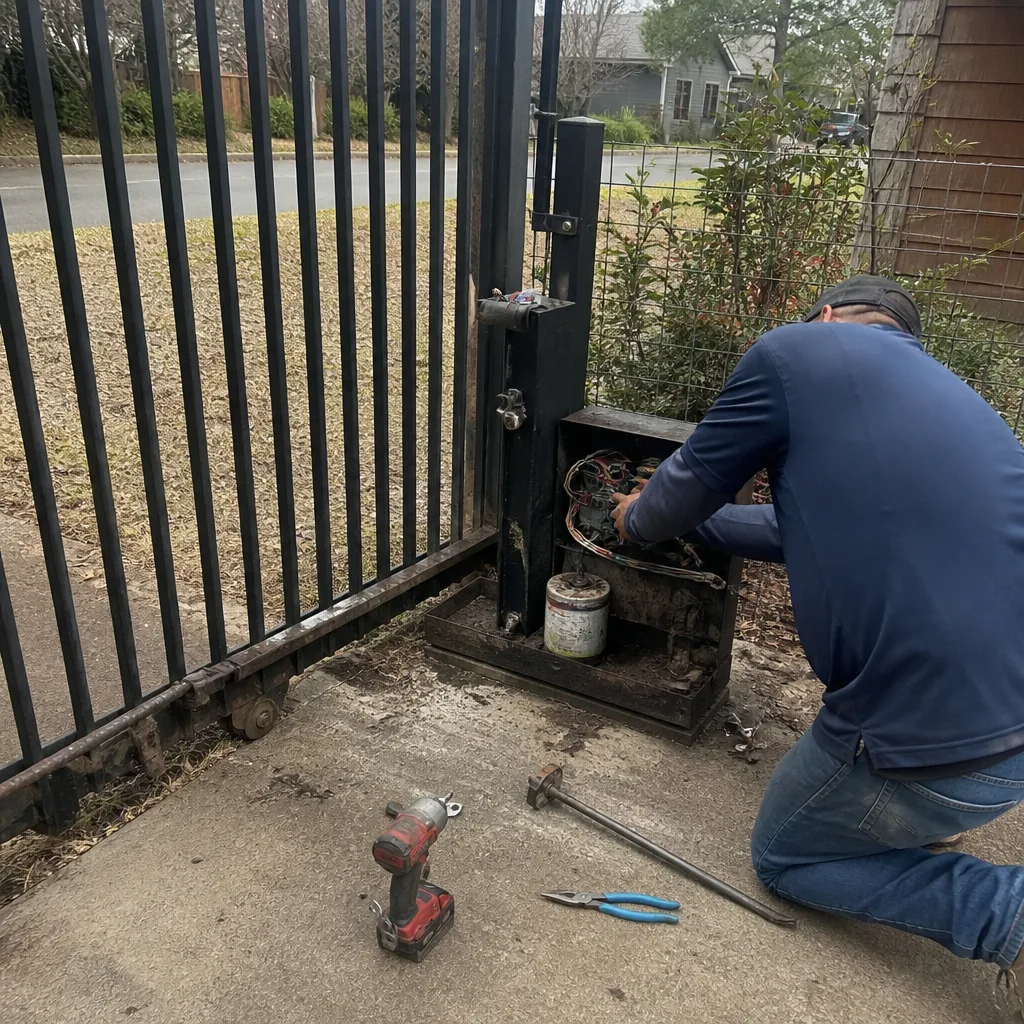 Before
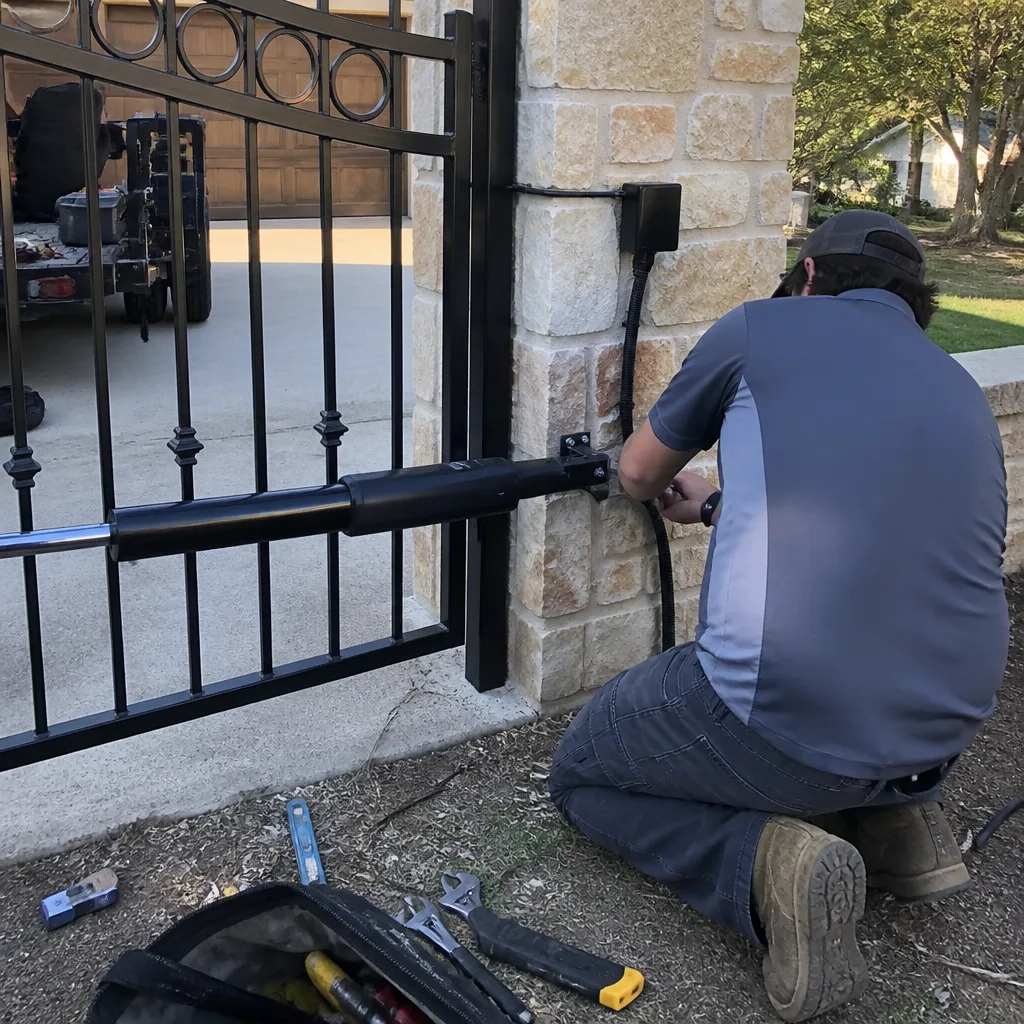 After
After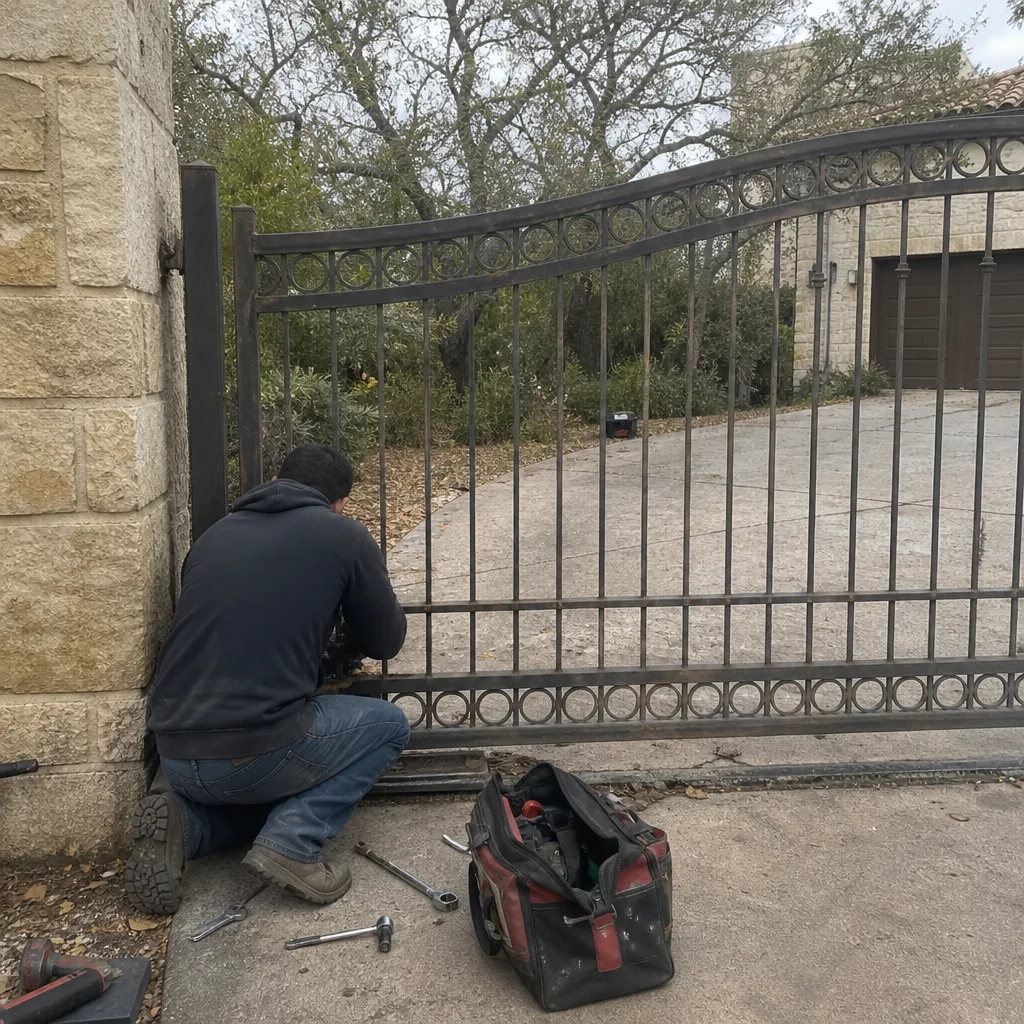 Before
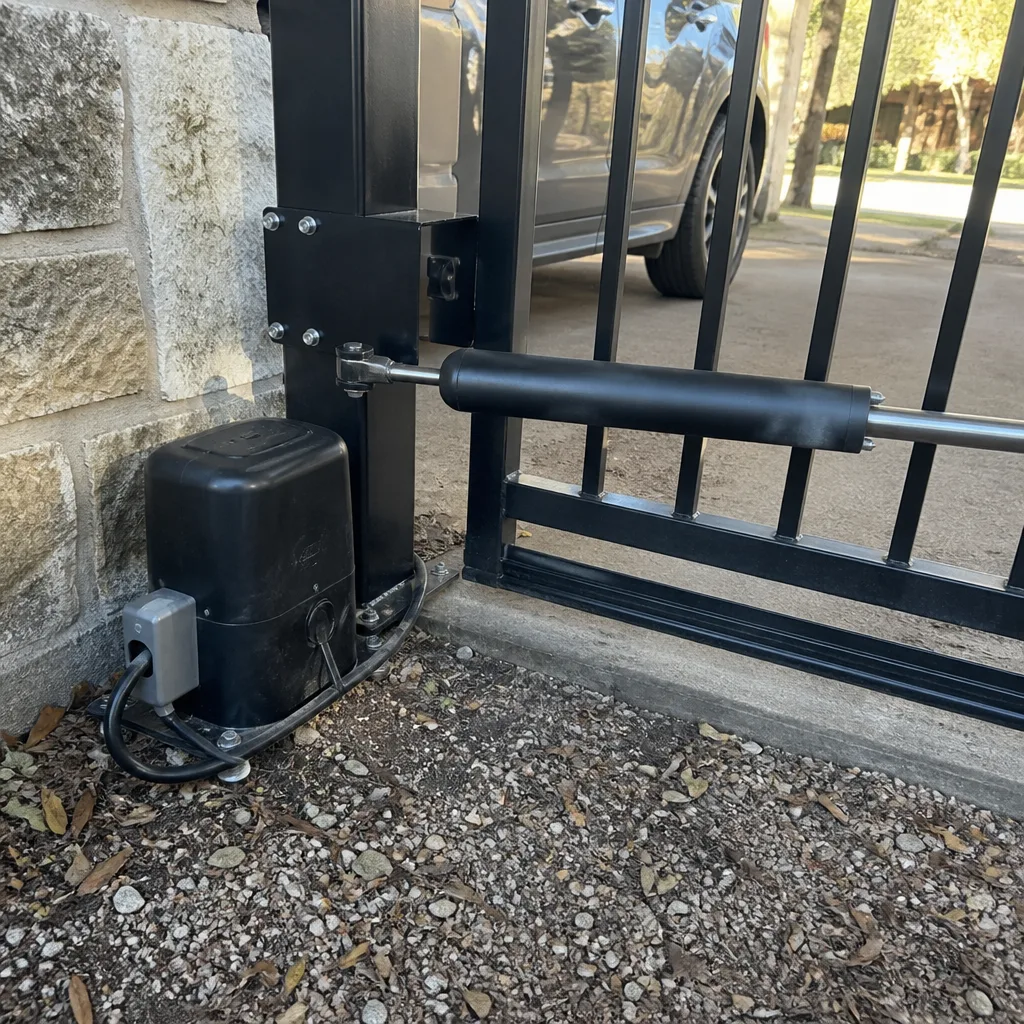 After
After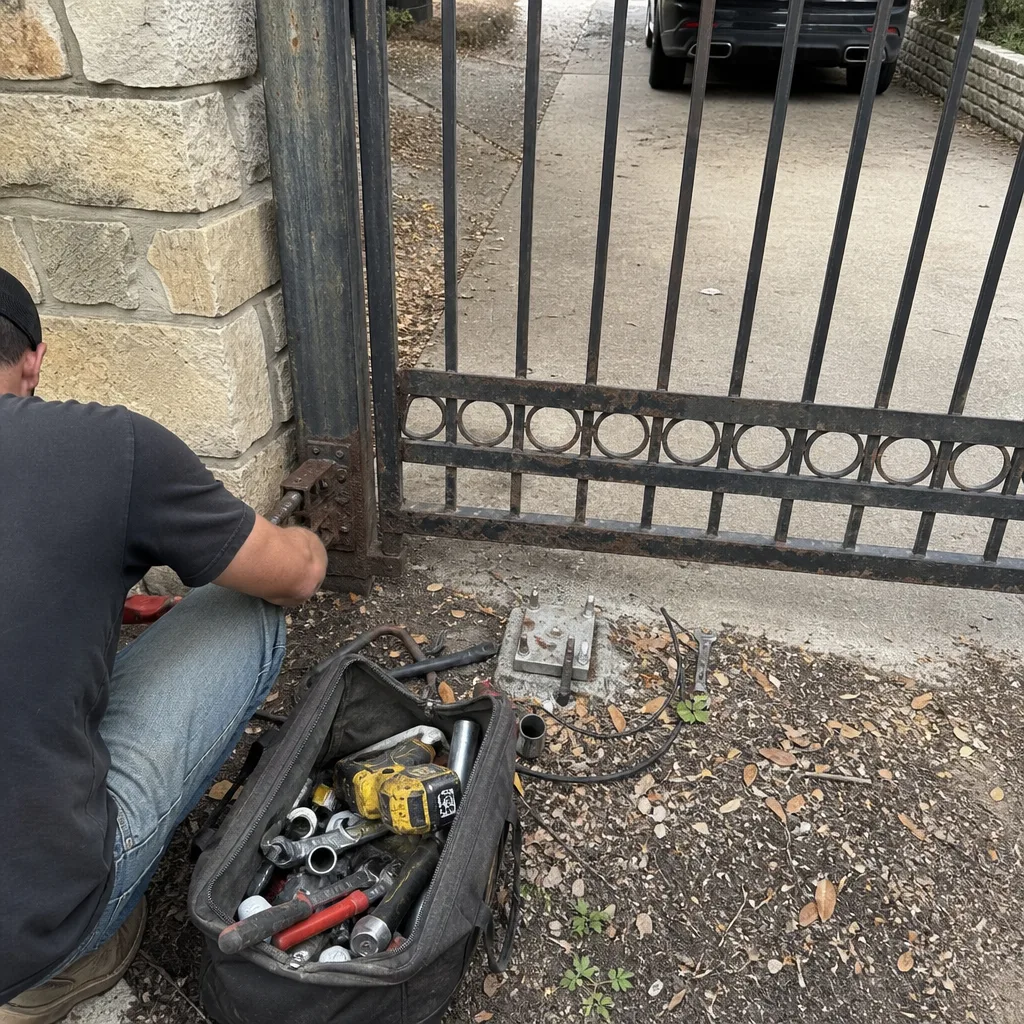 Before
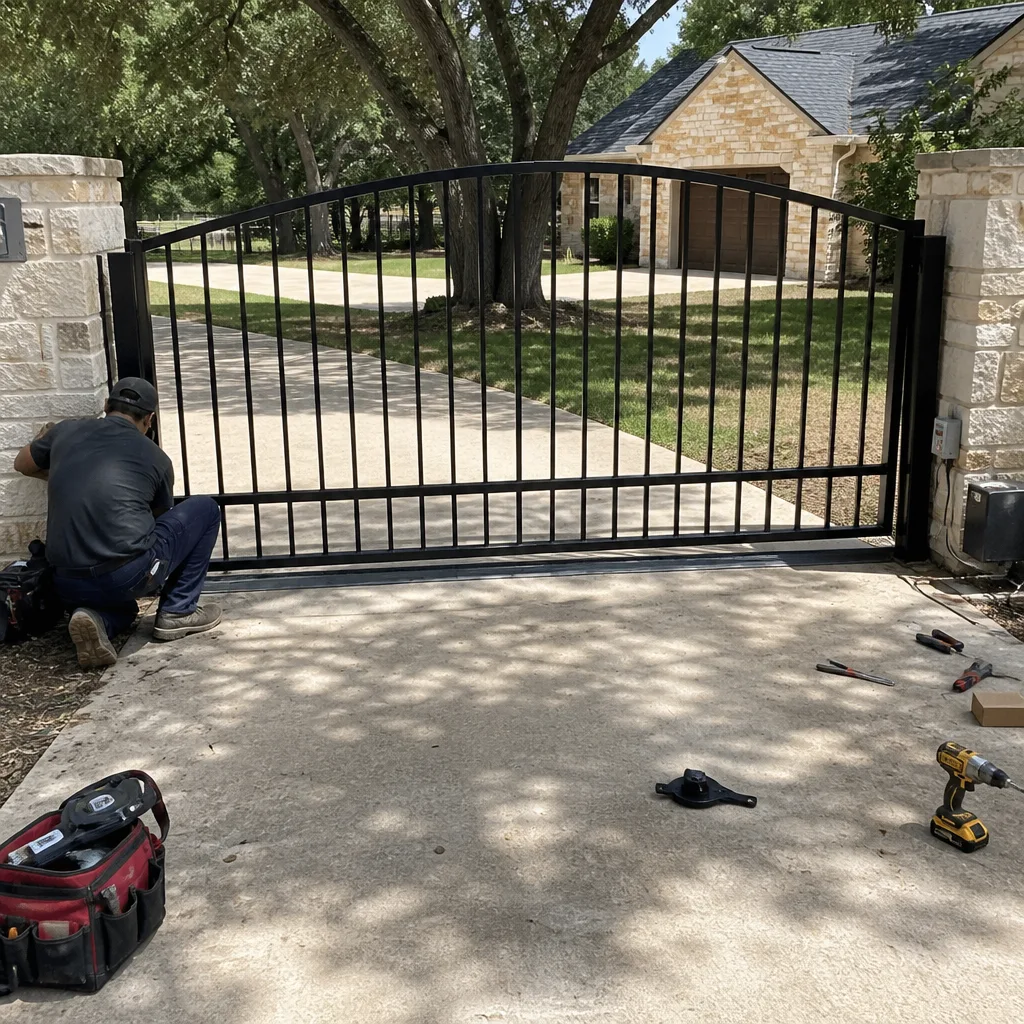 After
After