
Last updated October 16, 2026
 Wrought iron
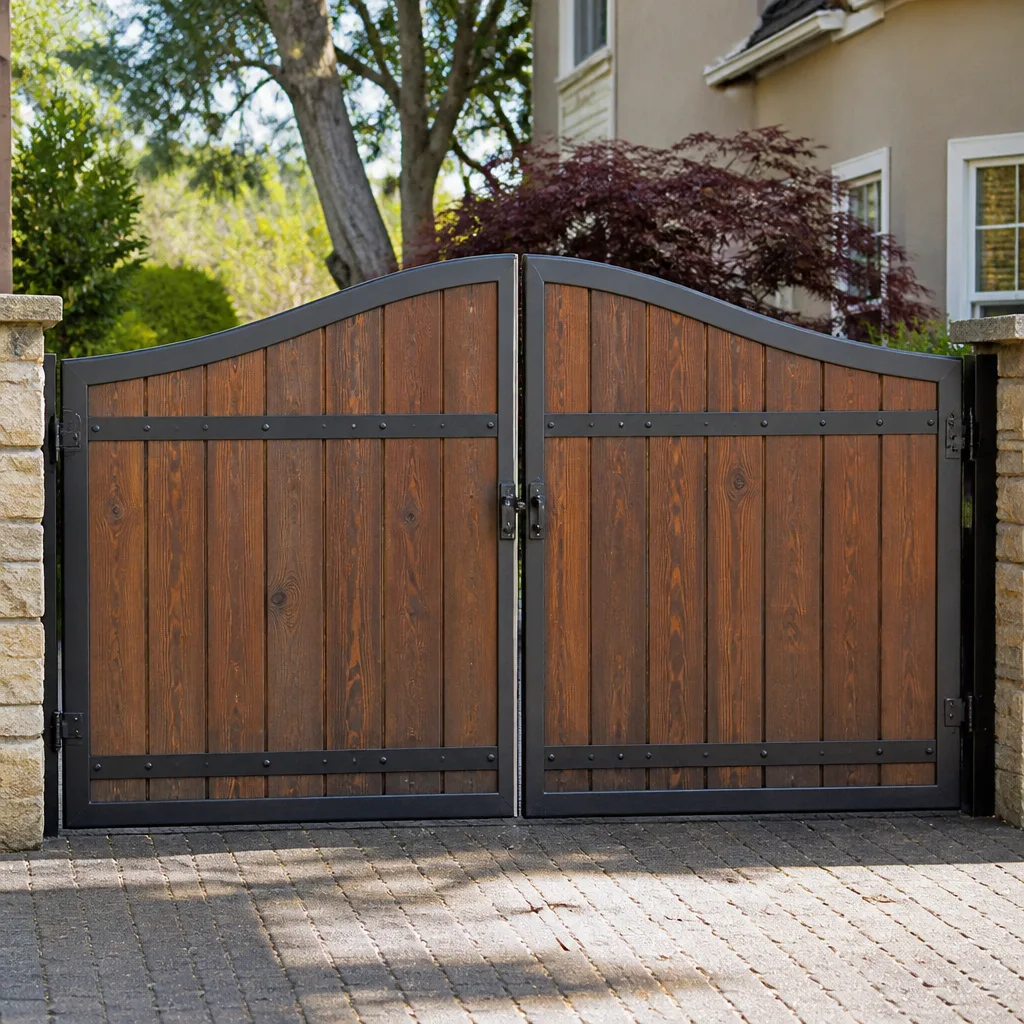 Wood & steel frame
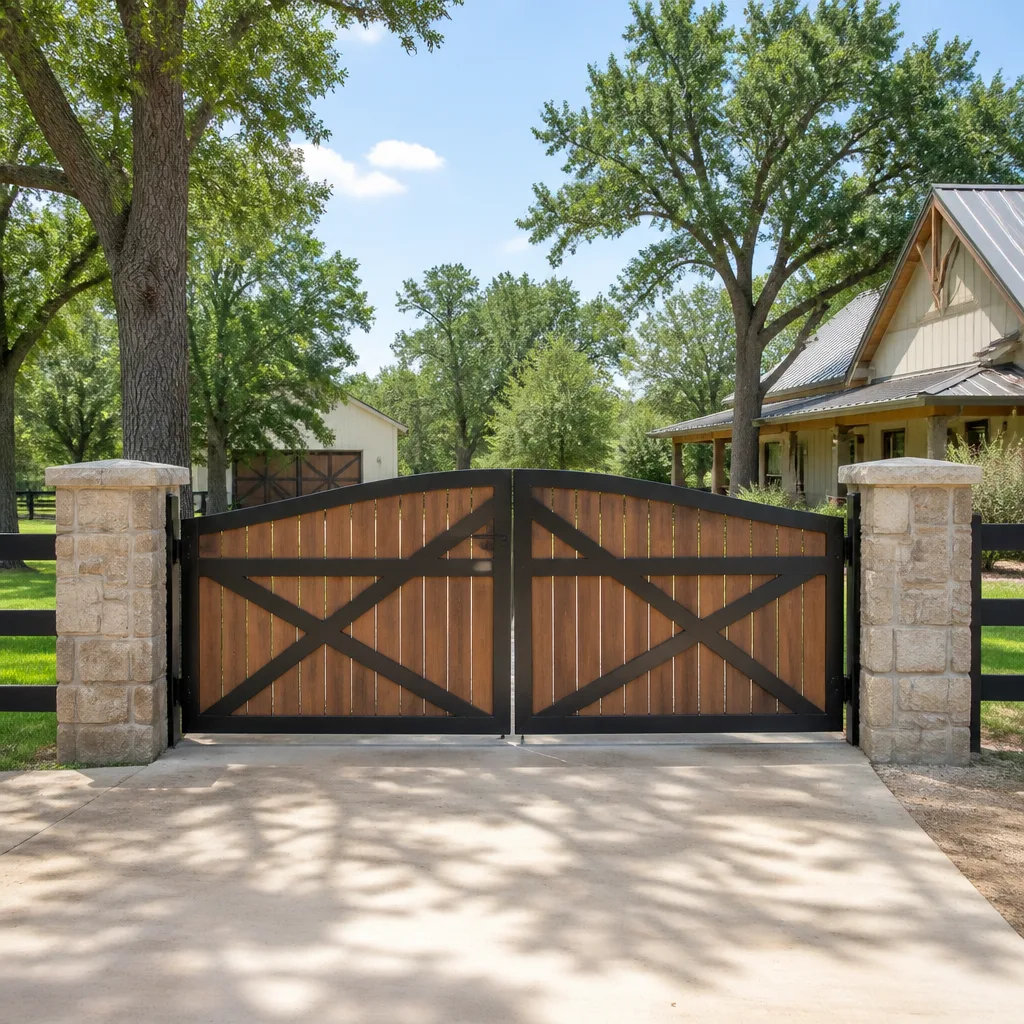 Farm & ranch
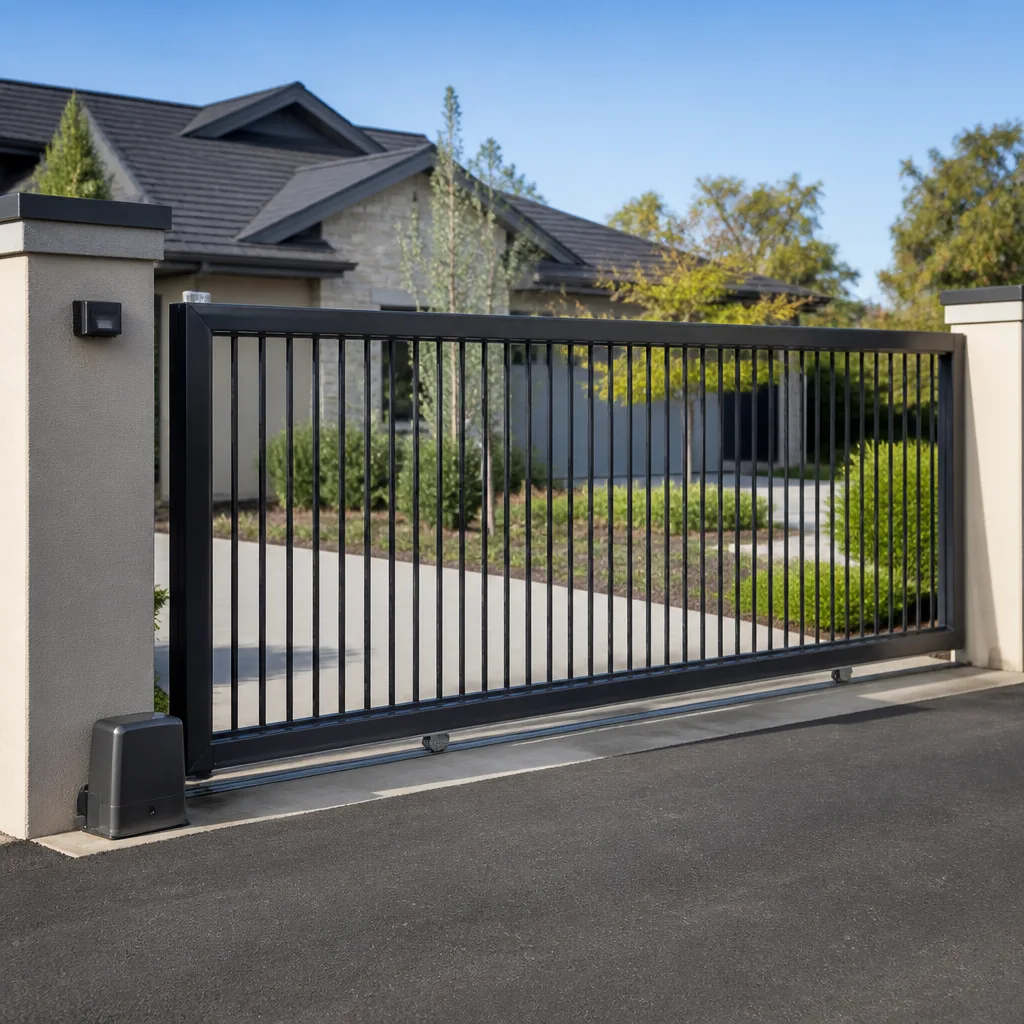 Sliding driveway gates
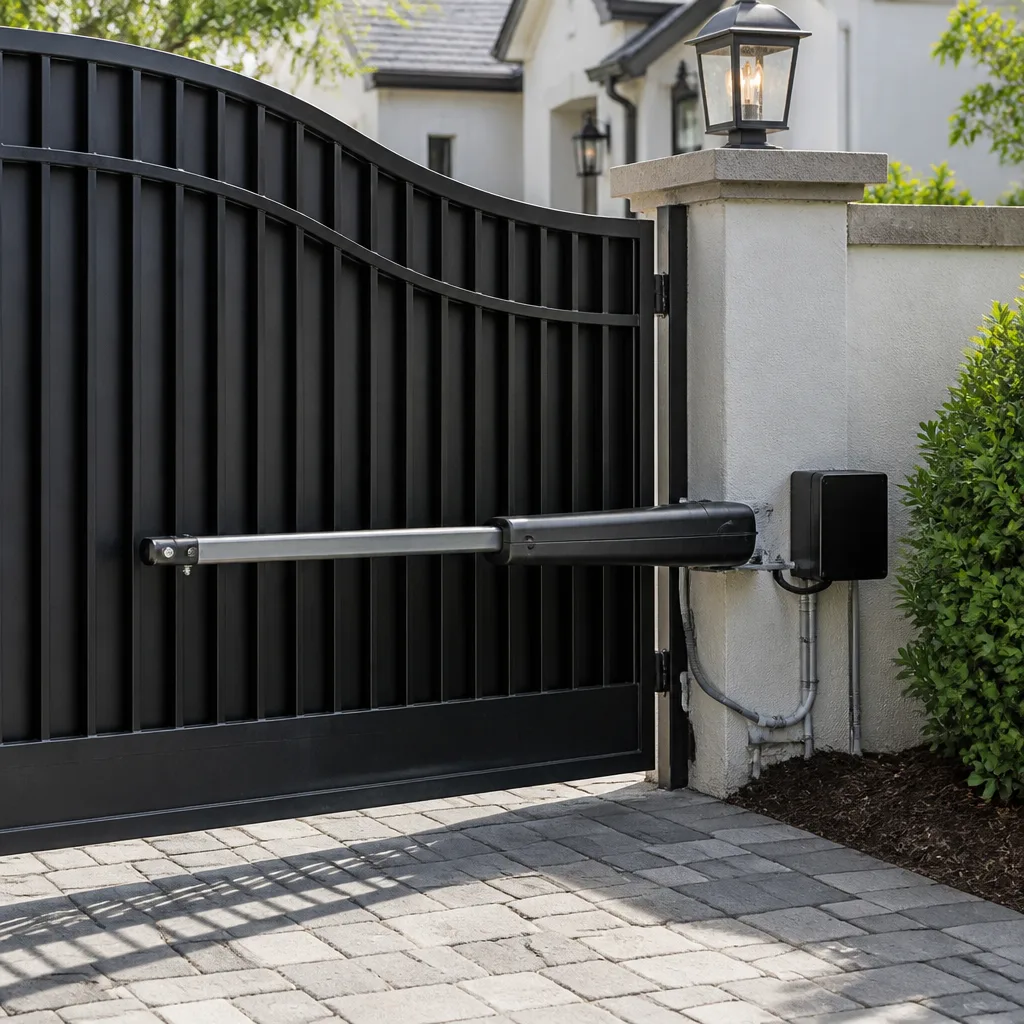 LiftMaster operators
Free on-site gate assessment - hinges, posts, and your LiftMaster or Nice gate operator checked before anything is quoted
The assessment is free and the quote is the invoice.
Get your free estimateGate Repair Warning Signs: A Austin Homeowner’s Reference Guide
Here’s something most Austin homeowners don’t realize: your gate has been telling you it’s failing for weeks, sometimes months, before it actually quits. The problem isn’t a lack of warning signs. The problem is that the signals don’t look like warnings. A gate that pauses an extra two seconds before reversing. A hum that wasn’t there last spring. A chain that clunks once per cycle instead of gliding silently. These aren’t personality quirks. They’re the mechanical equivalent of a check-engine light, and in our experience across Austin, homeowners dismiss them as normal wear until the morning the gate won’t open and a car is trapped in the driveway. This guide maps every observable warning sign to its likely cause, tells you which ones demand immediate action, and shows you exactly what to photograph before you call a technician.
Quick Answer
Gate failure in Austin almost always announces itself early through specific symptoms: hesitation mid-cycle, new grinding or squealing sounds, slower travel speed, visible wheel or hinge wear, a gate that sits at an uneven angle, or warning-light patterns on the opener’s control board. The most urgent signs – a gate that reverses onto people or vehicles, sparking at the motor, or a sliding gate that jumps its track – mean you should stop using the gate immediately. Most mechanical and electrical gate issues cost between $180 and $450 to repair when caught early, versus $900 to $2,400 for a full replacement after a catastrophic, ignored failure.
Styles & brands we work with
Table of Contents
- Warning Signs for Sliding Gates: What Austin Homeowners Actually See
- Warning Signs for Swing Gates: Hinges, Arms, and the Sounds That Matter
- Warning Signs for Bi-Fold and Overhead Gates
- Safety Warning Signs That Mean Stop Using the Gate Today
- Warning Signs That Allow a Scheduled Repair Window
- Normal Wear Sounds vs. Metal-on-Metal Sounds: How to Tell the Difference
- Symptom-to-Cause Map: The Most Common Austin Gate Failure Patterns
- How to Document and Photograph Warning Signs Before You Call
Warning Signs for Sliding Gates: What Austin Homeowners Actually See
Sliding gates are the most common automatic gate style in Austin, running on a steel track laid across the driveway or suspended from rollers overhead. Because the entire gate rides on wheels or rollers, mechanical wear is visible if you know where to look. The first thing to check is the V-track on the ground. A clean V-track has a smooth, uniform wear surface. A failing one shows a flattened groove, rust dust collecting along the edges, or, worst case, a visible notch where the wheel has been grinding against a dent or obstruction. In Austin’s climate, that rust isn’t cosmetic. Summer humidity followed by dry heat cycles accelerates corrosion on any unprotected track steel, and once pitting starts, the gate wheels catch on it and jerk the gate as it moves.
Beyond the track, watch for these specific sliding-gate symptoms:
- The gate hesitates or shudders at the same spot every cycle. This almost always points to a damaged section of track or a flat-spotted wheel. The opener’s motor is fighting a physical obstruction, and the strain transfers to the gearbox. Left alone, the gearbox strips.
- The gate drifts downhill after stopping. Sliding gates on sloped Austin driveways rely on the motor’s internal brake or a separate magnetic lock to hold position. Drift means the brake is failing, and eventually the gate will roll open on its own – a security issue, not just a convenience nuisance.
- The chain or belt visibly sags. A drive chain that hangs loose enough to see from ten feet away is either stretched past tolerance or its tensioner has failed. The chain can jump the sprocket mid-cycle and jam the gate in whatever position it lands.
- Wheel squeal that changes pitch when the gate passes a specific point. That’s a bearing failing inside the wheel itself, which is cheaper to replace now (typically $90 to $160 for the wheel plus labor) than after it seizes and drags the gate off its track.
If you’ve got a sliding gate controlled by a LiftMaster or BFT opener, the warning signs above apply equally. What differs is where the motor sits and how the drive mechanism connects. LiftMaster’s slide gate operators run on a direct gear-and-chain setup, so grinding from the gearbox area is a tell-tale sign of stripped drive gears. BFT units often use an internal gear motor, and a humming sound without movement usually means the motor is spinning but the gear has failed. Either way, the fix is cheaper before the gate binds hard against the track.
Warning Signs for Swing Gates: Hinges, Arms, and the Sounds That Matter
Swing gates fail differently than sliding gates because the load path is entirely different. Instead of riding on a track, the gate’s entire weight hangs from two or three hinge points on the post, and the opener pushes or pulls it through an arc. When hinge bearings wear, the gate sags slightly, and that sag changes every other measurement: the opener arm binds, the latch misses the receiver, and the gate’s closing speed becomes inconsistent. We see this pattern constantly in Austin neighborhoods with heavier ornamental steel gates, where the gate itself might weigh 400 to 600 pounds and the hinges are original from the day the house was built.
Here’s what to look for on a swing gate:
- A visible drop at the latch end. Stand at the driveway and sight down the top rail of the gate. If the far end sits visibly lower than the hinge end, the hinge bearings have worn. The gate is putting diagonal stress on the opener arm with every cycle.
- The gate grinds against the ground or scrapes the driveway at the end of its travel. This is the sag warning expressed physically. You’ll see fresh metal wear or a scrape mark in the concrete where the gate’s bottom edge touches down.
- The opener arm pops or clunks where it connects to the gate. The connection bracket takes the full torque of every open and close. A loose bolt here eventually wallows out the bracket hole, and the gate starts swinging free of the opener entirely.
- The gate slams shut on the last six inches instead of slowing down. Modern swing gate openers ramp speed down at the end of travel. If your gate comes in like it’s angry, the limit switch or the internal soft-stop logic isn’t functioning. On FAAC and BFT swing operators especially, this points to a failing limit-switch sensor – the small component that tells the gate when to stop.
Swing gates with Linear or Mighty Mule openers show these same issues, but Linear’s hydraulic swing operators add one more symptom: oil weeping from the cylinder or a hissing sound during movement, which indicates internal seal wear. The operator will still move the gate at first, then progressively lose strength over a few weeks.
For detailed information on swing gate and sliding gate repairs in the Austin area, see our Gate Repair in Austin service page.
Warning Signs for Bi-Fold and Overhead Gates
Bi-fold gates fold in the middle as they open, which creates a different failure profile from both sliding and swing styles. Because the gate’s weight is distributed across two panel sections joined by a central hinge, that central hinge carries a concentrated load that multiplies over time. The first warning sign is almost always the gate developing a slight “knee” – a bend or flex at the center hinge that you can see when the gate is fully closed and you view it edge-on. A bi-fold that’s starting to bow at the center is telling you the hinge is wearing, and the gate’s frame is now fighting itself every time it folds.
Overhead gates (the kind that lift vertically like a garage door) have their own signature problems. Listen for these:
- A twang or spring sound during the first foot of travel. That’s a torsion spring that’s lost tension or cracked. Overhead gate springs carry enormous load, and a failing spring is a genuine safety issue – never attempt to adjust an overhead gate spring yourself. This is a trained professional’s job.
- The gate rises unevenly, one side leading the other. Cables or pulleys are wearing. The higher the gate travels, the worse the imbalance gets, until one cable snaps and the gate jams hard into its tracks.
- A rattling sound that stops when the gate is fully open or fully closed. Loose hinge pins or track rollers. This one is usually a scheduled repair, not an emergency, but left alone the vibration accelerates wear on the opener’s chain and sprockets.
Bi-fold and overhead gates are less common in Austin’s residential market than sliding and swing styles, but we work on a steady number of them in the hill country neighborhoods west of MoPac, where tall perimeter walls call for gates that don’t need horizontal clearance. The repair economics are different here too: a bi-fold hinge replacement runs $220 to $380, while an overhead gate cable replacement lands around $260 to $480 depending on gate weight. Both are far cheaper than the $1,500-plus full re-hang you’ll face if the gate falls out of plumb entirely.
Safety Warning Signs That Mean Stop Using the Gate Today
Some warning signs aren’t about expensive repairs. They’re about physical safety. Automatic gates weigh hundreds of pounds, and a gate that reverses unpredictably or sparks at the control board can injure someone or start a fire. We take these calls seriously at Calder Gate Repair Austin, and we tell homeowners the same thing in person that we’ll tell you here: stop using the gate, disconnect the operator if you can do so safely, and call a professional immediately. These are the signs that put the gate in the “do not operate” category:
- The gate reverses onto or toward a person, car, or pet without any obstruction being present. This means the safety sensors or the opener’s force settings are malfunctioning. An automatic gate that can’t detect an obstruction is dangerous. Disconnect power to the opener right away.
- You see sparks, smell burning plastic, or notice scorch marks at the control board, motor housing, or any wiring junction. This is an electrical fault, not a nuisance issue. It can ignite surrounding material, and it will not get better on its own.
- The gate has jumped its track or fallen off its top guide roller. A sliding gate that’s partially derailed is unpredictably unstable. It can fall over completely, and a falling steel gate can weigh 500 pounds or more.
- The gate moves under its own weight when the opener is disengaged or unpowered. On a properly installed and maintained gate, manual operation should be smooth but the gate should hold position. A gate that rolls or swings freely means a broken brake or a severely worn mechanical drive, and without the motor holding it, the gate can run away down the slope.
- Any overhead gate cable shows fraying, broken strands, or visible separation from the drum. Overhead gate cables under load can snap without warning. This is the highest-risk failure mode in residential gate work, comparable to garage door springs.
If you’re seeing any of these five signs, the priority is securing the gate, not diagnosing the problem. On swing gates, you can often close the gate manually and pin the opener arm in place. On sliding gates, use a clamp or a chock to keep the gate from moving. Then make the call. The diagnosis happens when the tech arrives.
Warning Signs That Allow a Scheduled Repair Window
Not every gate problem is an emergency. Many of the homeowners who call Calder Gate Repair Austin home tell us they’ve been noticing a mild issue for weeks and simply want to know whether they can keep using the gate. The honest answer: most mechanical warning signs allow you a scheduled repair window of a few days to a couple of weeks, as long as the safety systems are still working and the gate completes each cycle fully. Here’s what falls into the “scheduled repair” category:
- A new, consistent squeak, chirp, or rattle that’s audible but doesn’t sound metallic or grinding. Lubrication issues, minor bracket wear, or a slightly loose cover plate. Not urgent, but worth addressing before the noise becomes a mechanical failure.
- Slower travel time than when the gate was new. A gate that used to close in 9 seconds and now takes 14 seconds has a developing problem – often low hydraulic fluid on a Linear operator, a wearing capacitor on an AC motor, or a bound-up wheel bearing. This is a “schedule it this week or next” issue, not a “drop everything” issue.
- Intermittent remote range problems. You have to be closer to the gate than before for the remote to work. This could be a dying battery in the remote, a failing receiver board, or interference from a new electronic device nearby. It’s an annoyance until the receiver fails completely.
- The gate closes but doesn’t latch or lock. A magnetic lock that’s losing power, a strike plate that’s drifted out of alignment, or a gate that’s slightly out of plumb. The gate still functions as a physical barrier, but the security it’s meant to provide is compromised.
- A warning light or error code on the control board that comes and goes. Document the pattern – which light, what color, when it appears – and send it to your tech before they arrive.
One exception to the relaxed timeline: if the scheduled-repair symptom worsens noticeably from one day to the next, upgrade it to urgent. A bearing that gets louder every cycle is progressing toward catastrophic failure, and the repair cost rises as the damage cascades through the drive system. We’d rather schedule the visit a day earlier and fix a $40 bearing than wait until the gearbox eats itself at $600.
Normal Wear Sounds vs. Metal-on-Metal Sounds: How to Tell the Difference
Here’s the most overlooked skill in gate ownership: listening. A healthy automatic gate makes a specific set of sounds. The motor hums, the chain or belt makes a soft, rhythmic whir, and the gate rollers or hinges produce a low, muffled rumble as they move. Those sounds are normal. They’ve been there since installation, they’re consistent, and they don’t change from cycle to cycle. When a gate starts to fail, the sound signature changes. Here’s how to tell what you’re hearing:
- High-pitched squeal that’s new: Friction. A bearing running dry, a roller that’s stopped rotating, or a metal bracket rubbing against a surface it didn’t touch before. Squeals are early-stage warnings and usually cheap to fix.
- Low grinding or growling sound, like rocks in a blender: Metal surfaces are no longer separated by a bearing, bushing, or lubricant. This is metal touching metal under load. It means a component is already failing, not starting to fail.
- Clunk or thunk at a specific point in each cycle: Something is physically catching and releasing. A bent track section, a loose chain that hops, or a gate wheel hitting a damaged area of the V-track.
- Chirping or chattering during motor startup: Electrical. A capacitor that’s struggling to start the motor, or relay chatter in the control board. Electrical sounds tend to precede electrical failures by days or weeks.
- A steady hum with no gate movement: The motor is getting power and trying to run, but the mechanical connection to the gate has failed. On gear-drive openers, this means stripped gears. On hydraulic operators, it can mean internal pump failure.
One of the reasons we train our technicians to ask “what does it sound like?” on the phone is that the sound signature narrows the diagnosis before anyone even arrives. If you can record a short video with audio of the gate cycling before you call, you’ll save the diagnostic time. Most customers end up paying less because the tech arrives with the right parts already on the truck. For a deeper look at opener-specific failures, check our Gate Opener Repair in Austin page.
Symptom-to-Cause Map: The Most Common Austin Gate Failure Patterns
This section is the heart of this guide. It’s a plain-language map from what you observe to what’s actually wrong, organized by symptom. Use it to understand what you’re dealing with before you call. Every price range below reflects typical residential gate repair costs in the Austin market, including the labor to diagnose, the part, and the installation time. Your specific gate, opener brand, and location within Austin will shift these numbers somewhat, but they’re honest reference points.
| Symptom You Observe | Most Likely Cause | Typical Austin Repair Cost | Urgency |
|---|---|---|---|
| Gate hesitates 2 – 3 seconds before moving after remote press | Failing control board logic, weak capacitor, or limit-switch drift | $150 – $320 | Scheduled (1 – 2 weeks) |
| Gate reverses direction mid-cycle for no reason | Obstruction sensor misalignment, force setting drift, or control board fault | $120 – $280 | Urgent (stop using if it reverses toward people/vehicles) |
| Grinding or growling from motor area during operation | Stripped gear or failing bearing inside opener gearbox | $180 – $400 | Scheduled if still functional; urgent if worsening daily |
| Gate travels visibly slower, takes longer to open/close | Low hydraulic fluid, worn capacitor, wheel bearing bound, or track obstruction | $90 – $350 depends on cause | Scheduled (within a week) |
| Gate sags, scrapes driveway, or won’t line up with latch | Worn hinge bearings or bent gate frame | $220 – $480 | Scheduled (2 – 3 weeks) |
| Remote range dropped, have to stand close to gate | Weak battery, failing receiver board, or antenna damage | $60 – $180 | Scheduled (at your convenience) |
| Sparks, burning smell, scorch marks at opener | Electrical short, failing capacitor, or damaged wiring | $180 – $450 depending on damage | Immediate (disconnect power, stop using) |
In our experience across Austin, the symptom we see ignored longest is the hesitant gate. People tell themselves the two-second pause is the system “warming up,” and that story works right up until the logic board fully fails and the gate stops responding altogether. A limit switch that’s drifting out of adjustment – the small sensor that tells the gate where to stop – can be corrected for under $200. The same problem left for 60 days becomes a $500-to-$700 control board replacement when the opener cooks itself trying to run against a bad stop signal. That’s the single biggest money-saver in gate ownership: fix the hesitation when it’s still a hesitation.
How to Document and Photograph Warning Signs Before You Call
Homeowners who photograph and document their gate symptoms before calling a repair company get faster diagnoses and more accurate quotes. Here’s the exact process we recommend, and it applies whether you call Calder Gate Repair Austin or any other Austin gate company:
- Photograph the gate from the hinge or drive side, not just the face. The side view shows sag, alignment drift, and track wear. Take the photo from about ten feet back, with the whole gate in frame.
- Photograph the V-track or wheel path at the point where the gate hesitates or makes noise. If there’s a specific spot in the cycle where the problem occurs, mark it with chalk or tape, then photograph that exact location.
- Take a close-up of the opener brand label and model number. The label is normally on the side of the motor housing or inside the control box. If the tech knows whether they’re coming to a LiftMaster, FAAC, or Linear unit before they arrive, they can bring the right parts.
- Record a 15- to 20-second video with sound of the gate making the sound or malfunctioning. Stand far enough back that the audio is clean without wind noise. Send the video when you book the appointment.
- Note the error code or light pattern if there is one. Most modern gate openers have a small LED that blinks in a specific pattern to indicate a fault. Count the blinks and note the color. If there’s a digital display, photograph that too.
- Write down when the problem started and whether it’s getting worse. “It started making the noise two weeks ago and it’s louder now than it was last week” is useful diagnostic information that changes the repair approach.
These steps take about ten minutes and they consistently cut diagnostic time in half. Our techs in Austin arrive with a working hypothesis already formed, which means less time onsite and a bill that reflects efficiency. For electric gate issues specifically, our Electric Gate Repair in Austin page covers what to document for opener and control board failures in more detail.
Common Mistakes to Avoid
- Ignoring a new noise. Gates don’t make new sounds for fun. Every new squeak, grind, or clunk is a component passing the point of normal wear and entering the failure zone. The cost difference between “new squeak” and “seized bearing” is usually two to three times.
- Lubricating the gate frame without cleaning the track first. Spraying oil on top of Austin’s normal dust and grit creates an abrasive paste that accelerates track and wheel wear. Clean the surface before adding lubricant, or skip it and call a professional.
- Powering through a malfunction with force setting adjustments. Turning up the opener’s force adjustment to muscle a binding gate through its cycle masks the underling problem and overloads the opener. This is the fastest way to burn out a motor or strip a gear.
- Ignoring remote-range decay. Reduced remote range is rarely about the remote. It’s usually the receiver board failing. By the time the remote stops working entirely, the board has often failed in a way that also affects the safety sensors.
- Letting a sag go because the gate “still works.” A sagging swing gate still opens and closes, yes. But every cycle is grinding the hinge bearings deeper into the post, and eventually the post itself fails. Post replacement is a $1,500-plus job. Hinge replacement is a $300 job.
- Attempting DIY spring or cable work on an overhead gate. Overhead gate springs are under extreme tension and can kill. There’s no homeowner version of this repair that’s worth the risk. Call a professional.
- Using the gate as a climbing frame or letting kids ride on it. Even a few extra pounds of weight on a moving gate changes the load on every mechanical component. A swing gate with a kid riding the end can bend the frame beyond repair.
See the difference
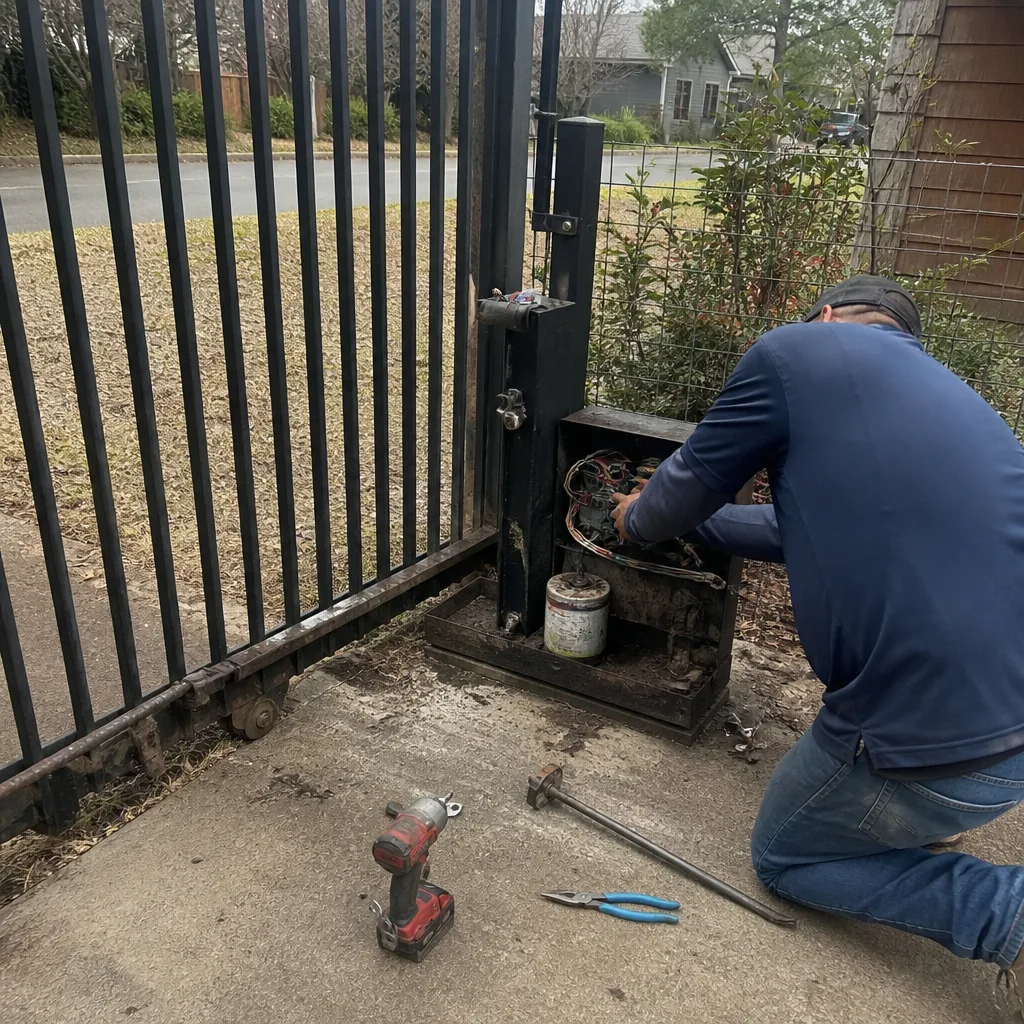 Before
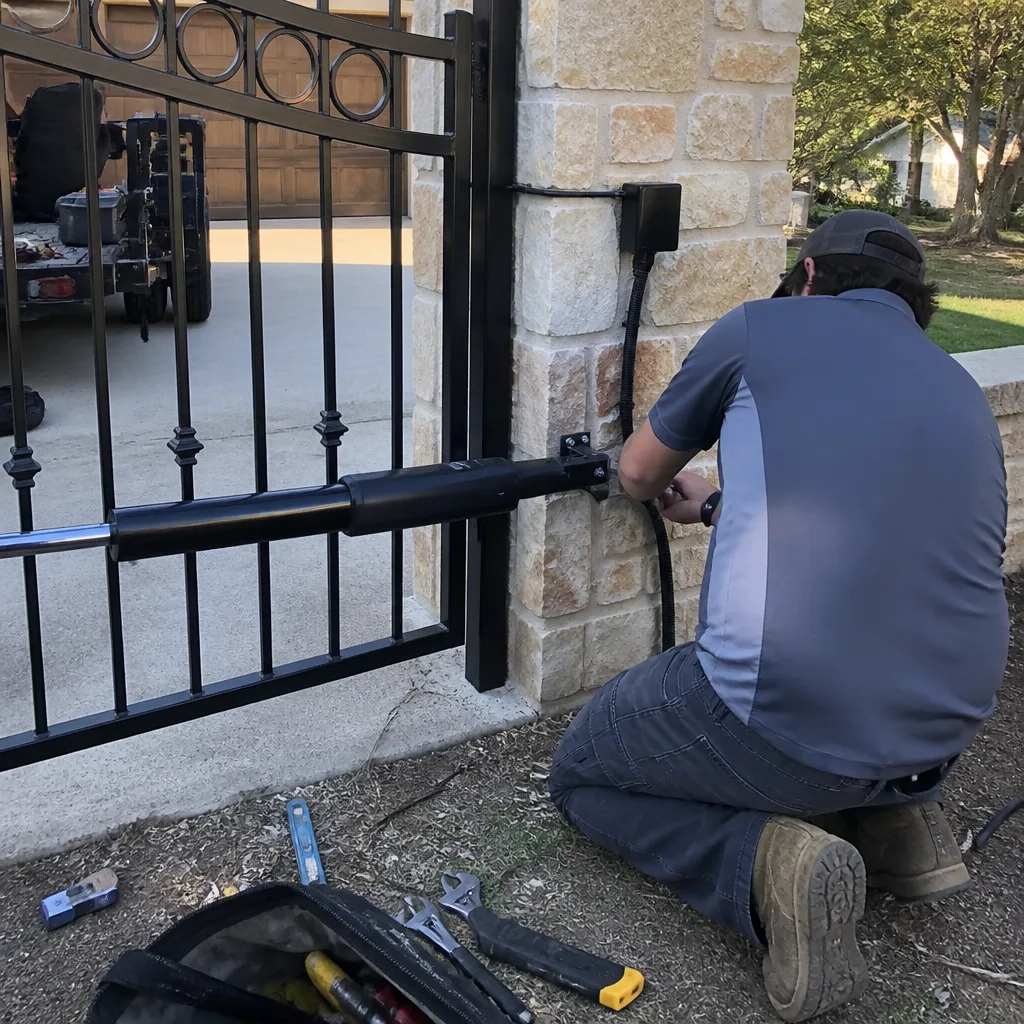 After
After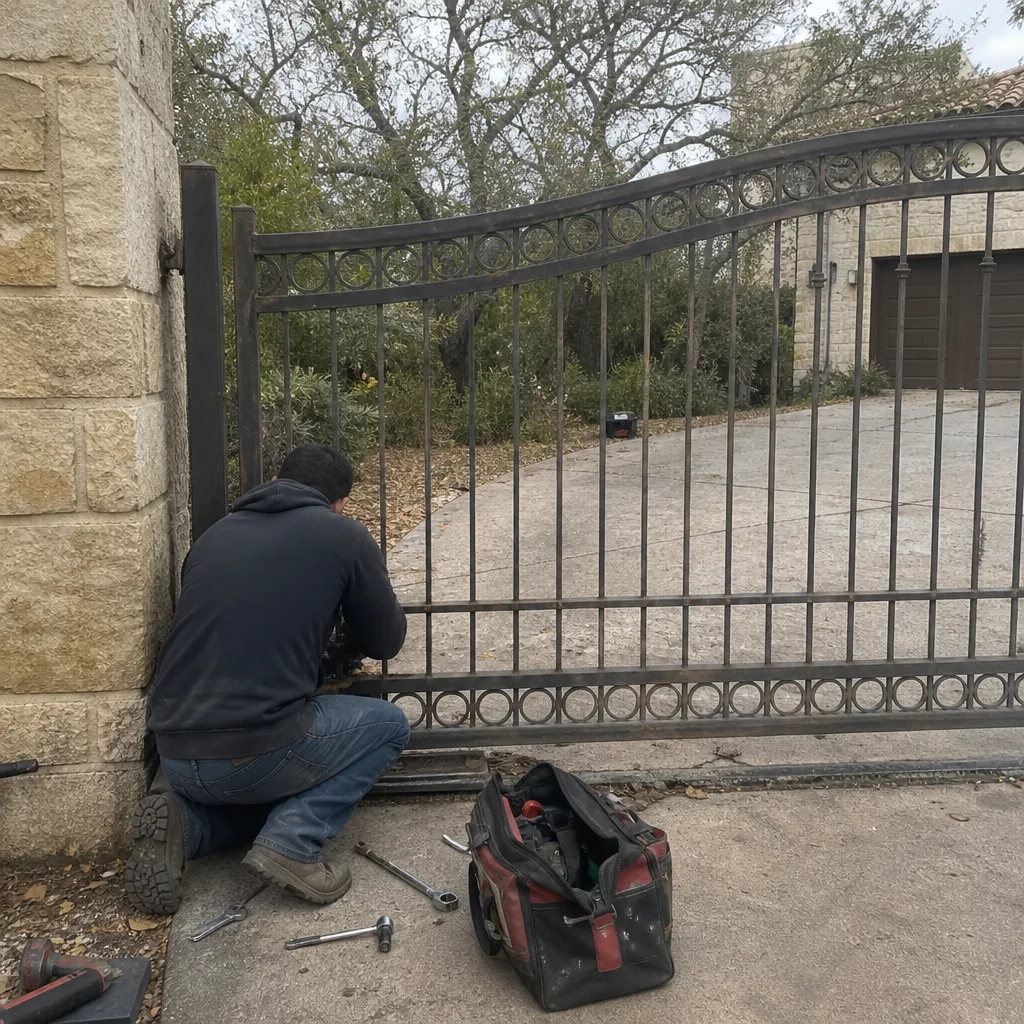 Before
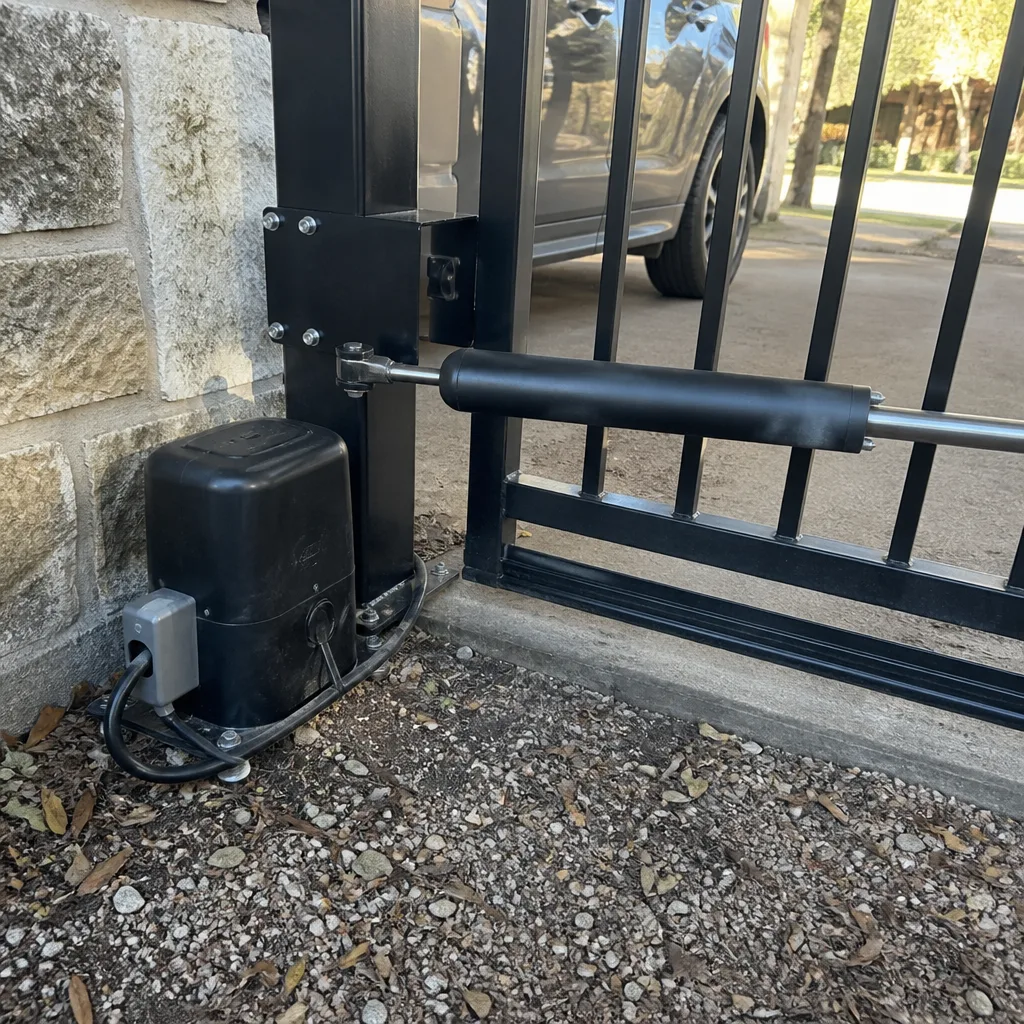 After
After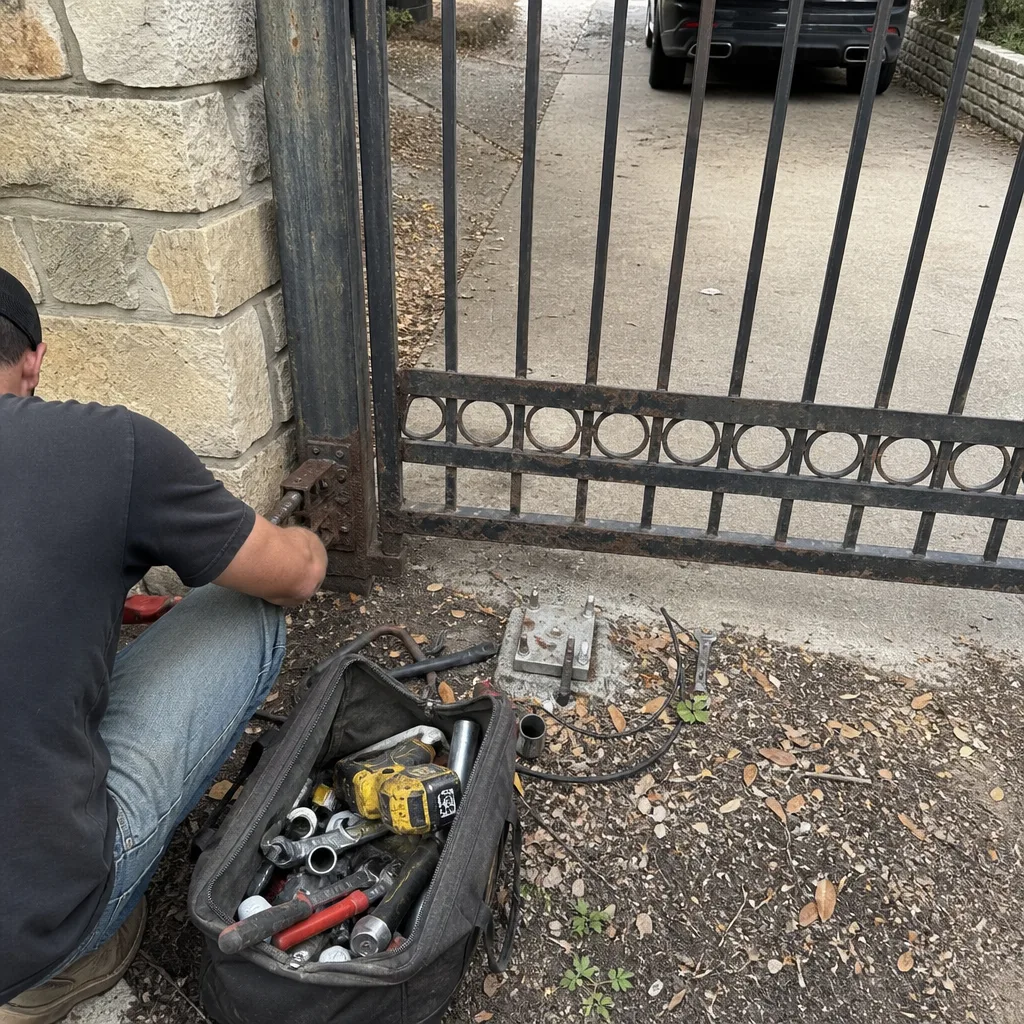 Before
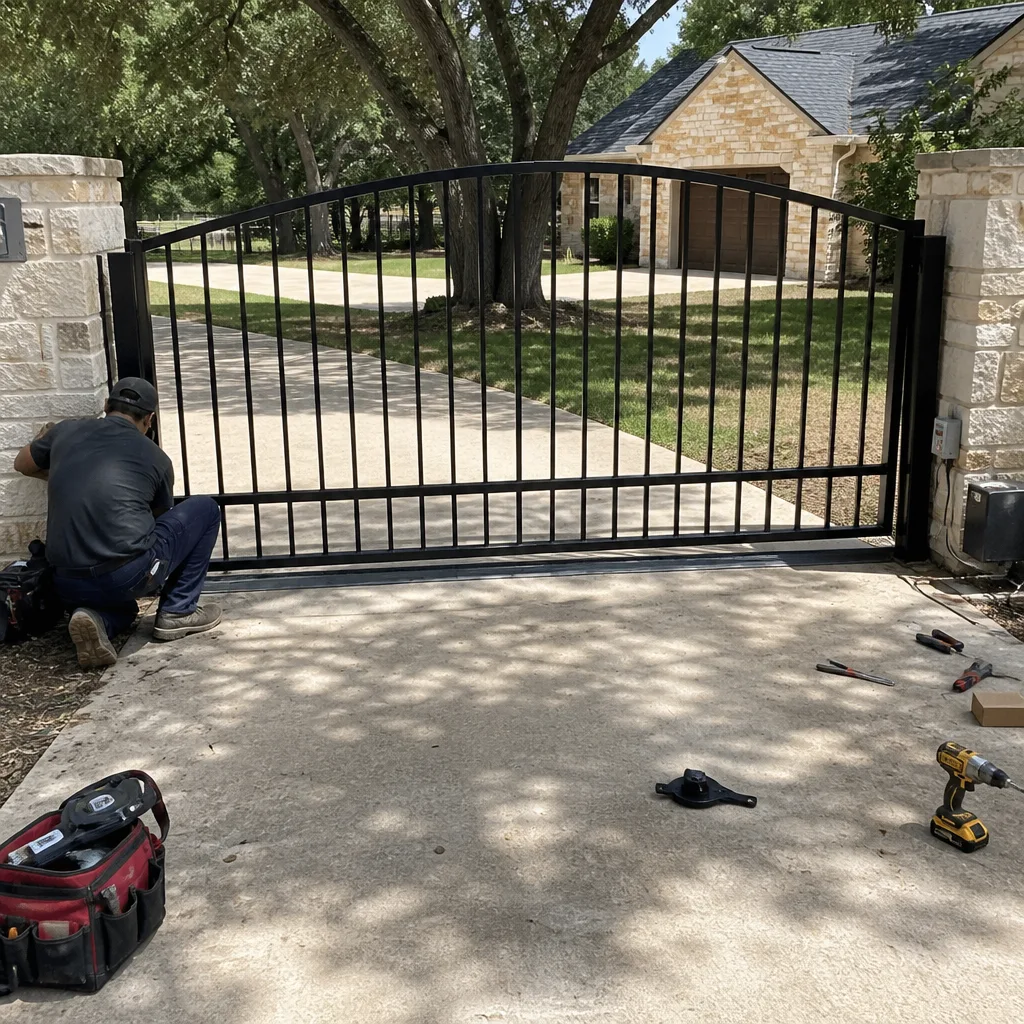 After
AfterWhen to Call a Professional
Call a gate repair professional when any safety sign appears, when a mechanical symptom has been present for more than two weeks, or when you’ve noticed the problem worsening even slightly. Call the same day if the gate won’t complete a cycle, makes a new grinding sound, or sits visibly out of alignment. You should also call if your gate opener is more than ten years old and beginning to show any of the symptoms in this guide – an older unit with a failing gearbox isn’t worth rebuilding in most cases, and a straight assessment will save you money over repeated patch repairs. Calder Gate Repair Austin offers free estimates in Austin – call (903) 354-7419. We’ll document the diagnosis in writing, give you a price before any work starts, and back the repair with our 365-Day Done Right Promise.
Frequently Asked Questions
Most residential gate repairs in Austin run between $180 and $450 for mechanical issues like bearing replacement, track repair, hinge replacement, and limit-switch adjustment. Electrical and control board work falls in the $150 to $500 range depending on the opener brand and the specific board. Full gate replacement or major structural repairs run $1,500 to $3,500 or more. Every Calder Gate Repair job includes a written price before any work starts, so the number on your invoice is the number you agreed to. Call (903) 354-7419 for an exact quote – estimates are free.
Yes, in most cases. Calder Gate Repair Austin runs repair calls across Austin daily, and we keep our calendar open for urgent repairs – especially safety-related issues like a gate that’s jumped its track, reversing on its own, or sparking at the opener. Call (903) 354-7419 and a live person will answer (24/7, not a call center) and give you a real arrival window, not a four-hour guessing game.
A full opener replacement includes removing the old unit, installing the new opener (matched to your gate type and weight), connecting and calibrating the safety sensors, programming remotes and keypads, and testing the full cycle with you watching. We factory-familiar with LiftMaster, FAAC, BFT, Linear, Viking, Ghost Controls, DoorKing, Elite, and Mighty Mule, and we’ll recommend a unit that fits your existing gate rather than upselling you into a unit you don’t need. Written price first, every time. Call (903) 354-7419 to schedule a free measure and written estimate.
Yes. We run new electrical circuits for gate openers, install and align photoelectric safety sensors, replace worn safety edges, and bring older installations up to current safety standards. Power-run work in Austin typically runs $400 to $900 depending on the distance from the panel and whether trenching through concrete or rock is required. We quote it upfront. Call (903) 354-7419 for specific pricing on your property.
In Austin, a quality residential gate opener installed correctly lasts 8 to 12 years, with the lower end more common for gates facing full west sun and heat. The two biggest killer factors in this area are heat-soaked control boards (Austin summer temperatures inside a metal control box routinely exceed 140°F) and strain from gates that sag or bind. Proper installation and prompt mechanical repair extend the opener’s life. If your opener is over ten years old and starting to act up, a replacement often costs less than repeated component repairs. Call (903) 354-7419 for an honest assessment.
We service the entire Austin area, from Round Rock and Cedar Park down to Buda and Kyle, and everywhere in between: Tarrytown, Hyde Park, Mueller, Circle C, Steiner Ranch, Lakeline, and the hill country communities west of the city. The climate and gate brands are consistent across central Texas, and our techs carry parts for the full nine-brand lineup on every truck. Call (903) 354-7419 and we’ll get you on the schedule with a live arrival time you can track.
The Bottom Line
Your gate has been sending signals. The hesitation before it moves. The scrape at the driveway. The clunk in the opener arm. The remote that only works up close. Each of these is a specific, diagnosable, and usually affordable problem in the $180 to $450 range when addressed early. The same problems ignored become $900 to $2,400 replacement scenarios, plus the day your car sits trapped behind a dead gate. Austin’s heat and caliche dust accelerate every form of gate wear, so the timeline from “minor annoyance” to “complete failure” is shorter here than in gentler climates. Watch for the signs, document what you see, and call (903) 354-7419 when you spot them. Written price first, guaranteed workmanship, and a free second visit if the repair fails inside 365 days. That’s how gate repair should work in Austin.
Written by Nico Alvarez, Owner at Calder Gate Repair Austin, serving Austin since 2009.